
At Bazaar Of Designora, we want you to understand the fabric beneath the artwork, not just the design printed on top of it. When a product page says “100% ring-spun cotton,” it is giving you two separate pieces of information: the fiber is cotton, and the cotton fibers were transformed into yarn using the ring-spinning method.
That distinction matters because many customers understandably read “100% cotton” and “ring-spun cotton” as two competing materials. They are not. A T-shirt can be both at the same time. In fact, standard manufacturers produce lightweight, high-quality shirts in 100% ring-spun cotton. Some heathered and grey variants include polyester blends, so checking the specific garment page remains essential.
Our simplest explanation
“100% cotton” answers what the fibers are made from. “Ring-spun” answers how those fibers were spun into yarn.
What you can expect
A smoother, softer surface than many conventional open-end cotton tees, while retaining cotton’s breathable, absorbent and naturally matte character.
1. The Difference in One Clear Picture
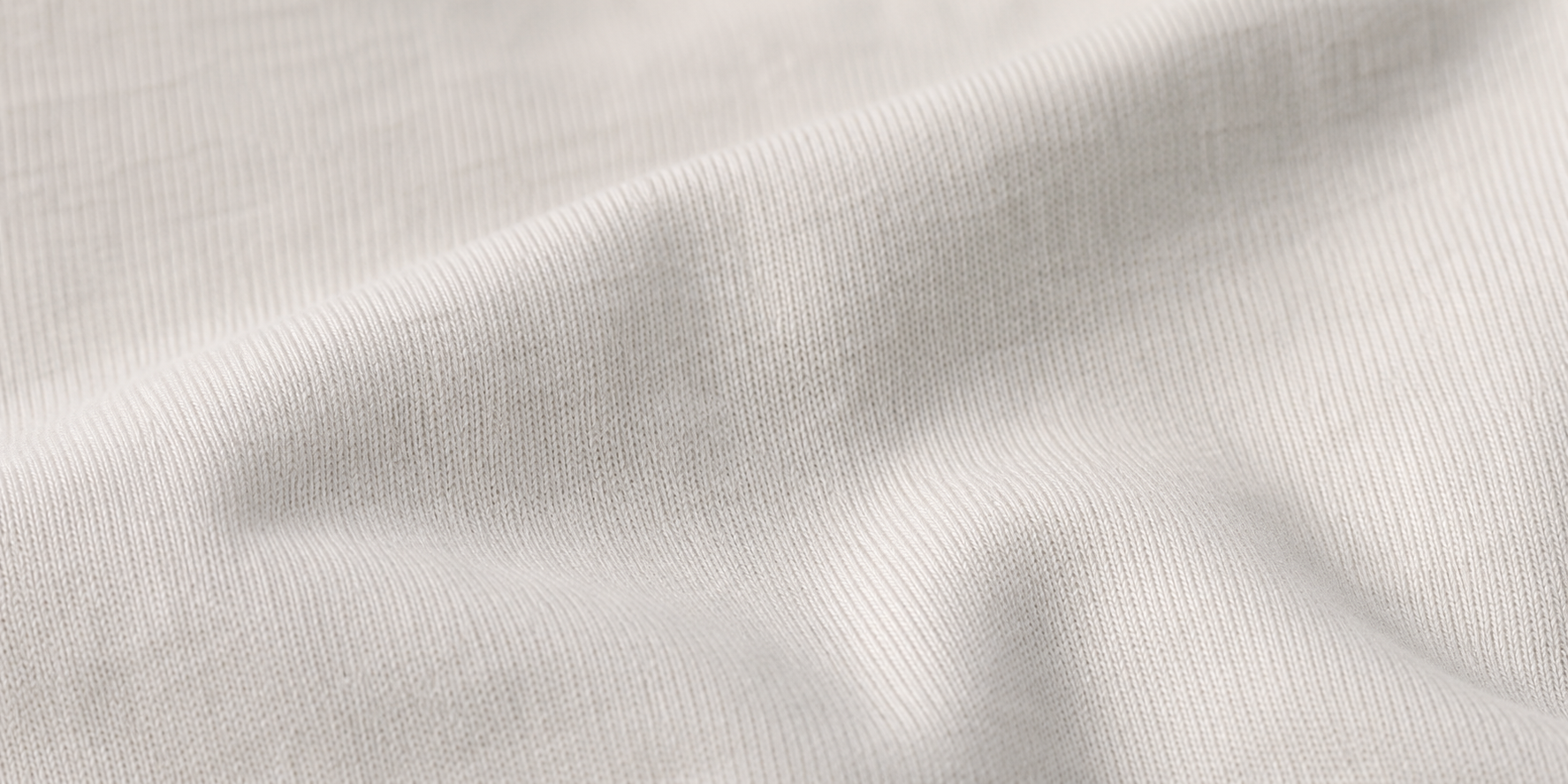
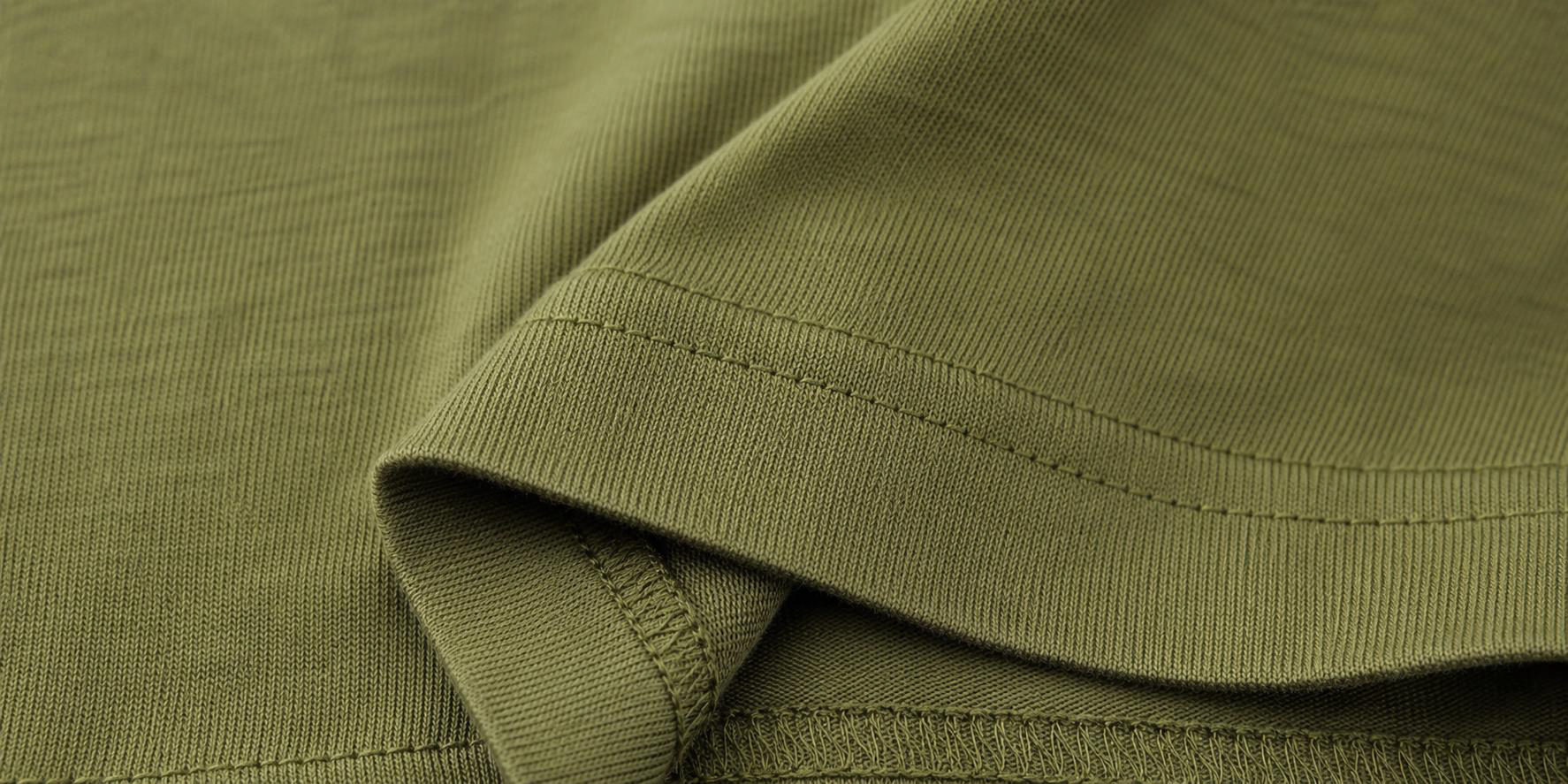
In practical terms, you are usually wearing a cotton jersey fabric. Jersey is a knit structure, which means the material is made from interlooped yarn rather than from a rigid woven grid. That structure is one reason a cotton T-shirt or cotton casual top can feel flexible and easy to move in even without stretch fibers. Visually, the surface often looks smooth from a normal distance, while up close you can see tiny knitted columns and a fine, natural texture.
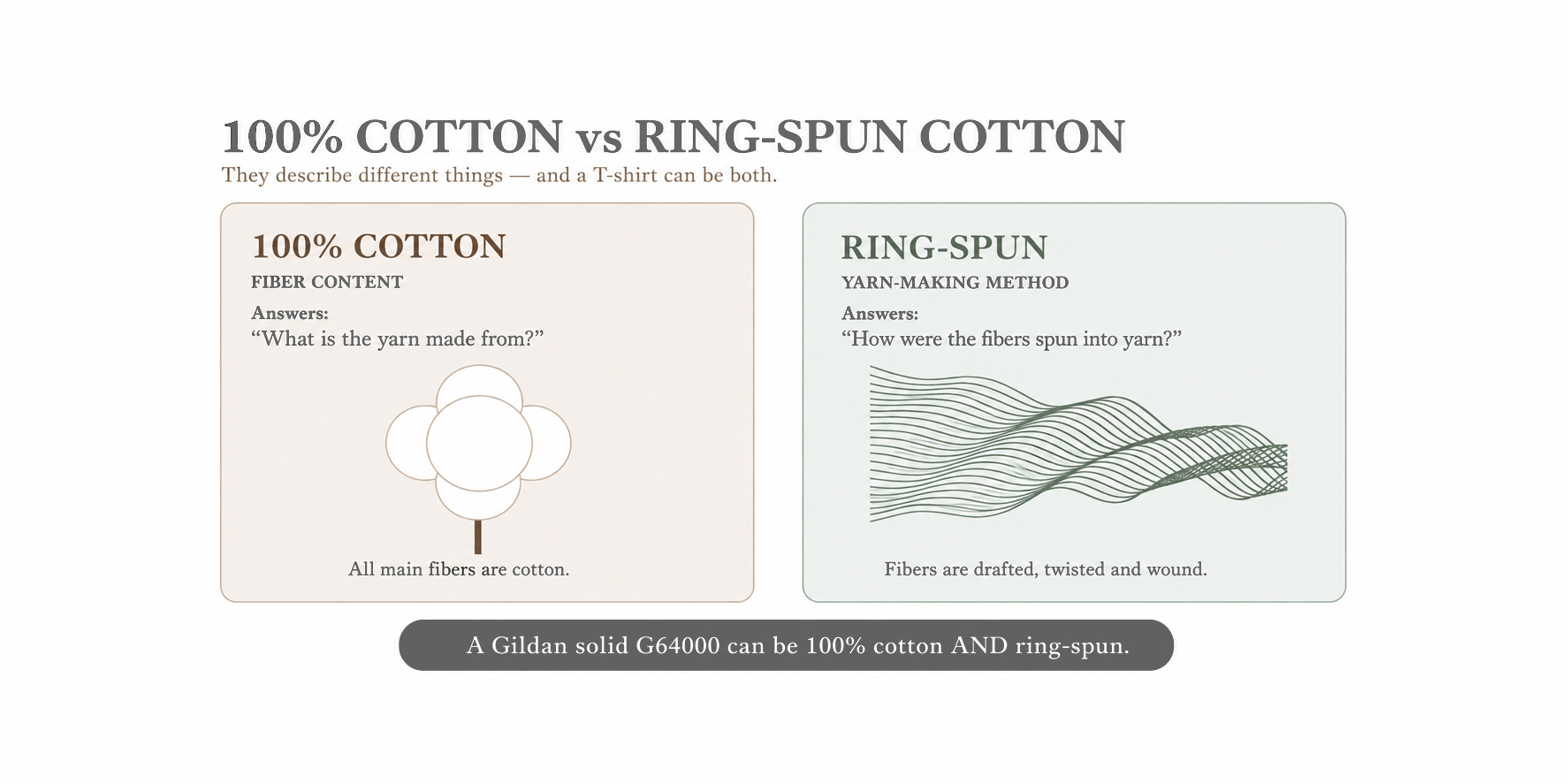
When you see “100% cotton,” you know that the main fabric fibers are cotton rather than polyester, viscose or another fiber. The phrase does not tell you whether the cotton yarn was ring-spun, rotor-spun, air-jet spun or made by another spinning route.
When you see “ring-spun cotton,” you learn how the yarn was created. Ring spinning drafts the prepared fibers into a finer strand and inserts true twist through a rotating spindle, ring and traveler. The result is generally a finer, more consolidated yarn with a smooth hand. CottonWorks describes ring-spun fabric softness as a benchmark among common cotton spinning systems.
|
Question |
100% cotton tells you… |
Ring-spun tells you… |
|
Fiber identity |
Cotton is the fiber content. |
Ring-spun can be cotton, a blend or another spinnable staple fiber. |
|
Customer feel |
Varies widely by yarn, weight, knit and finish. |
Often smoother, softer and more refined. |
|
Are they opposites? |
No. |
No — a fabric can be 100% cotton and ring-spun. |
2. What You Are Actually Wearing — and How It Looks
A ring-spun cotton T-shirt is normally made from cotton staple fibers that have been cleaned, aligned, drafted and twisted into yarn before that yarn is knitted into jersey. What touches your skin is therefore not loose cotton fiber, but a flexible knitted structure made from many continuous yarn paths.
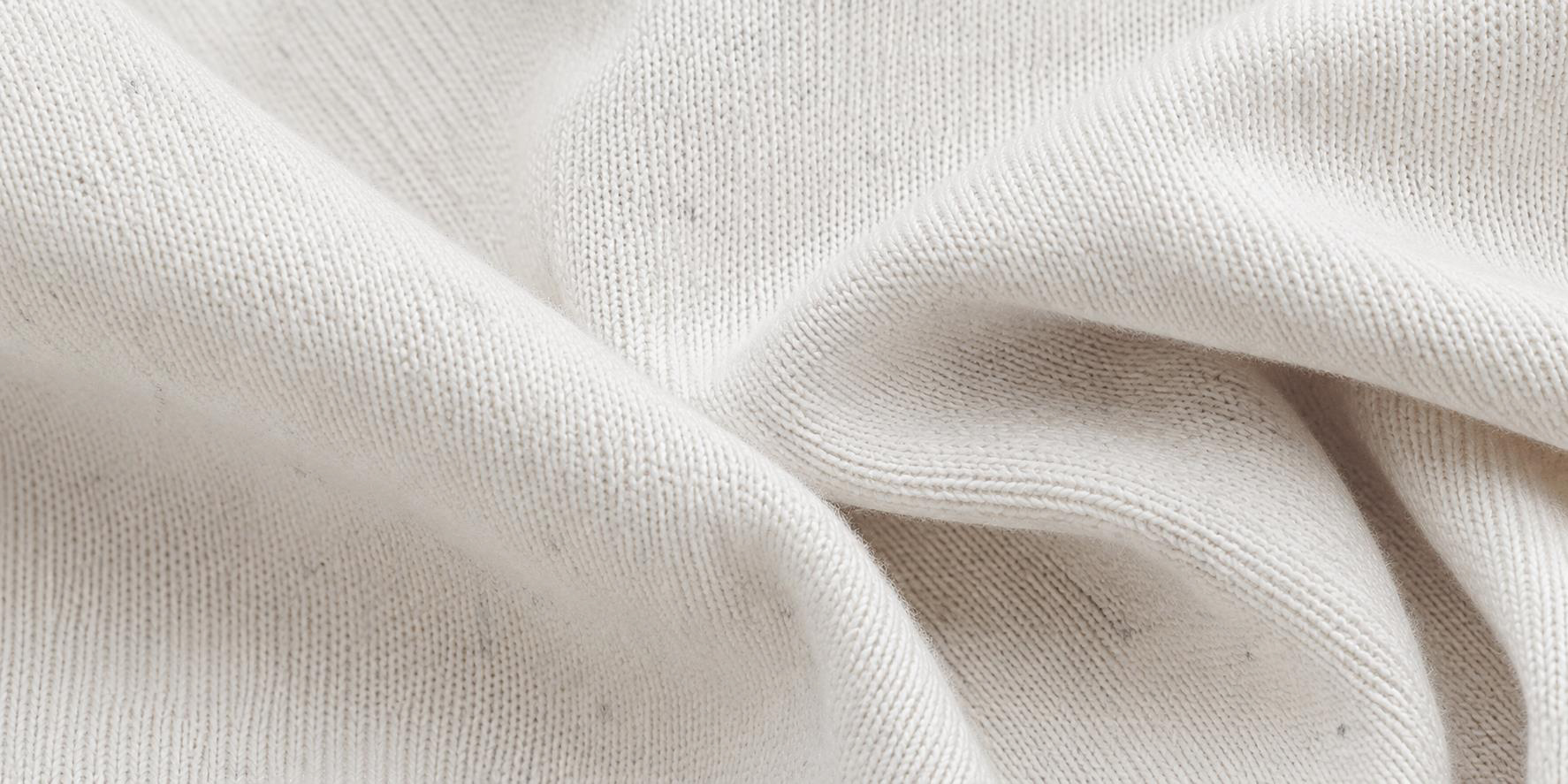
Visually, ring-spun cotton often looks cleaner and more refined than a more rustic open-end cotton fabric. The yarn tends to present fewer bulky irregularities, so the jersey surface can appear smoother. This is valuable for Bazaar Of Designora because a smoother surface can help printed artwork look more precise and visually even. Garment manufacturers specifically highlight this smooth fabric surface as ideal for screen printing, embroidery, iron-on transfers, discharge, bleaching, and direct-to-garment application methods.
How it tends to sit and move
- A matte, natural surface rather than a shiny athletic finish.
- Soft, moderate folds that follow the body without the liquid flow of viscose or silk.
- A refined casual look: less visibly coarse than many basic heavyweight cotton blanks.
- The final silhouette still depends on fabric weight, pattern, size and fit—not only on the yarn method.
3. Skin Feel, Sweat and Weather Performance
Against your skin, ring-spun cotton is usually experienced as softer, smoother and less scratchy than a visibly coarse cotton jersey of comparable weight. The difference comes from yarn structure: better fiber alignment and true twist can create a more consolidated surface. It still feels recognizably cotton—dry, natural and non-slippery rather than cool and slick like many performance synthetics.
What happens with sweat
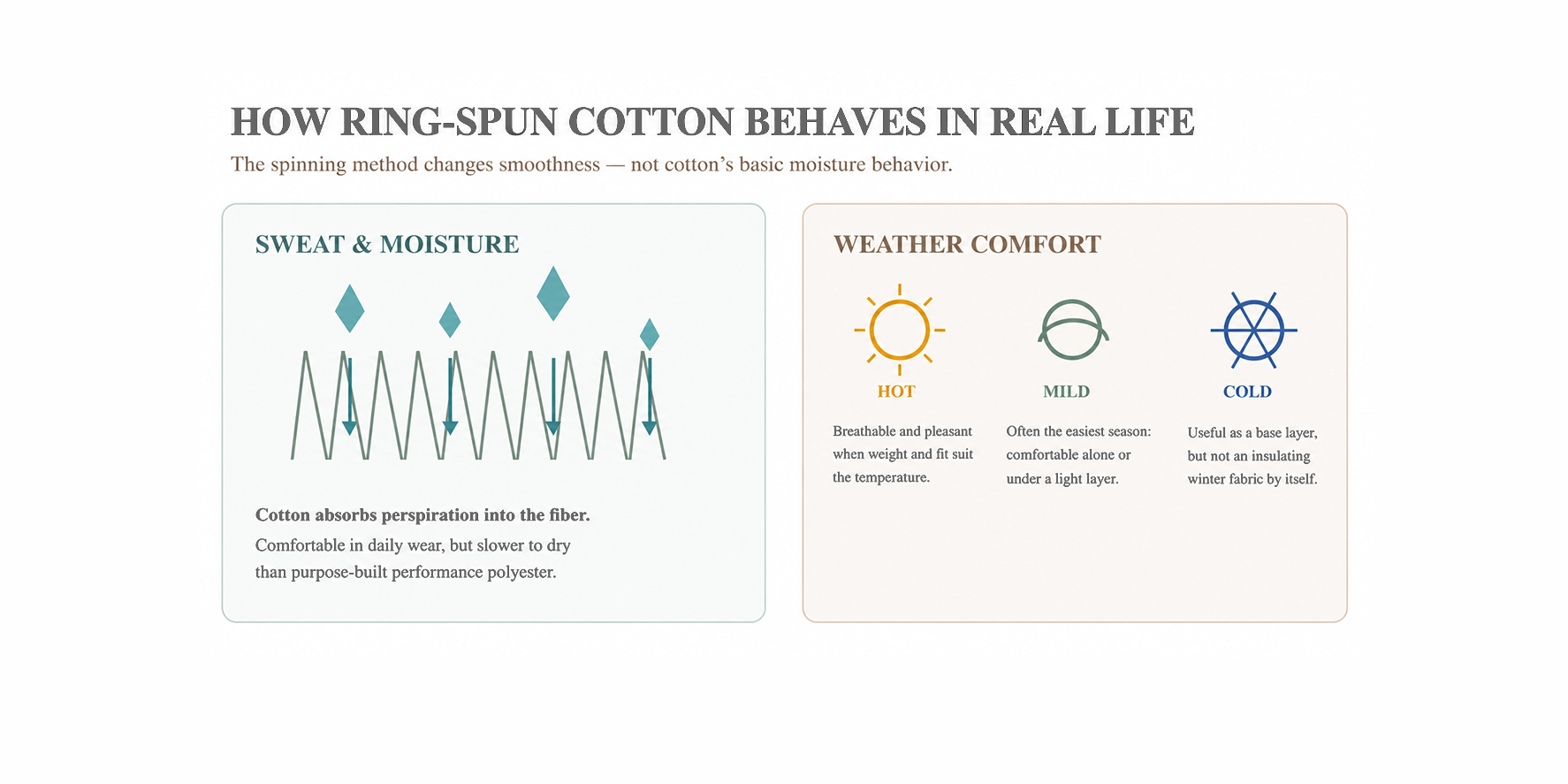
Ring-spun cotton remains cotton. It absorbs perspiration into the fiber rather than rapidly transporting it away like a purpose-built moisture-wicking polyester. During normal daily wear, this can feel pleasant because moisture is not simply sitting as liquid on the surface. During heavy exercise or humid heat, however, the shirt may become damp, heavier, slower to dry and more likely to cling.
Hot, mild and cold conditions
- Hot weather: comfortable for casual wear when the fabric is light enough and the fit allows air movement. Less ideal for prolonged, heavy sweating.
- Mild weather: often its most comfortable setting—easy alone, under an open shirt or beneath a light layer.
- Cold weather: useful as a comfortable base layer, but not a true insulating fabric. Damp cotton can feel chilly, so it should not replace technical cold-weather layers.
4. Production Journey I — Cotton Sourcing, Harvesting and Bales
Major apparel manufacturers often operate as vertically integrated producers and rely heavily on cotton grown in the United States. A standard manufacturing journey begins after cotton is selected and purchased, then continues through yarn spinning, textile production, sewing, and distribution. Industry leaders now consistently focus on reaching goals for sourcing 100% sustainable cotton according to verified, program-based definitions designed to reduce overall environmental impact during production.
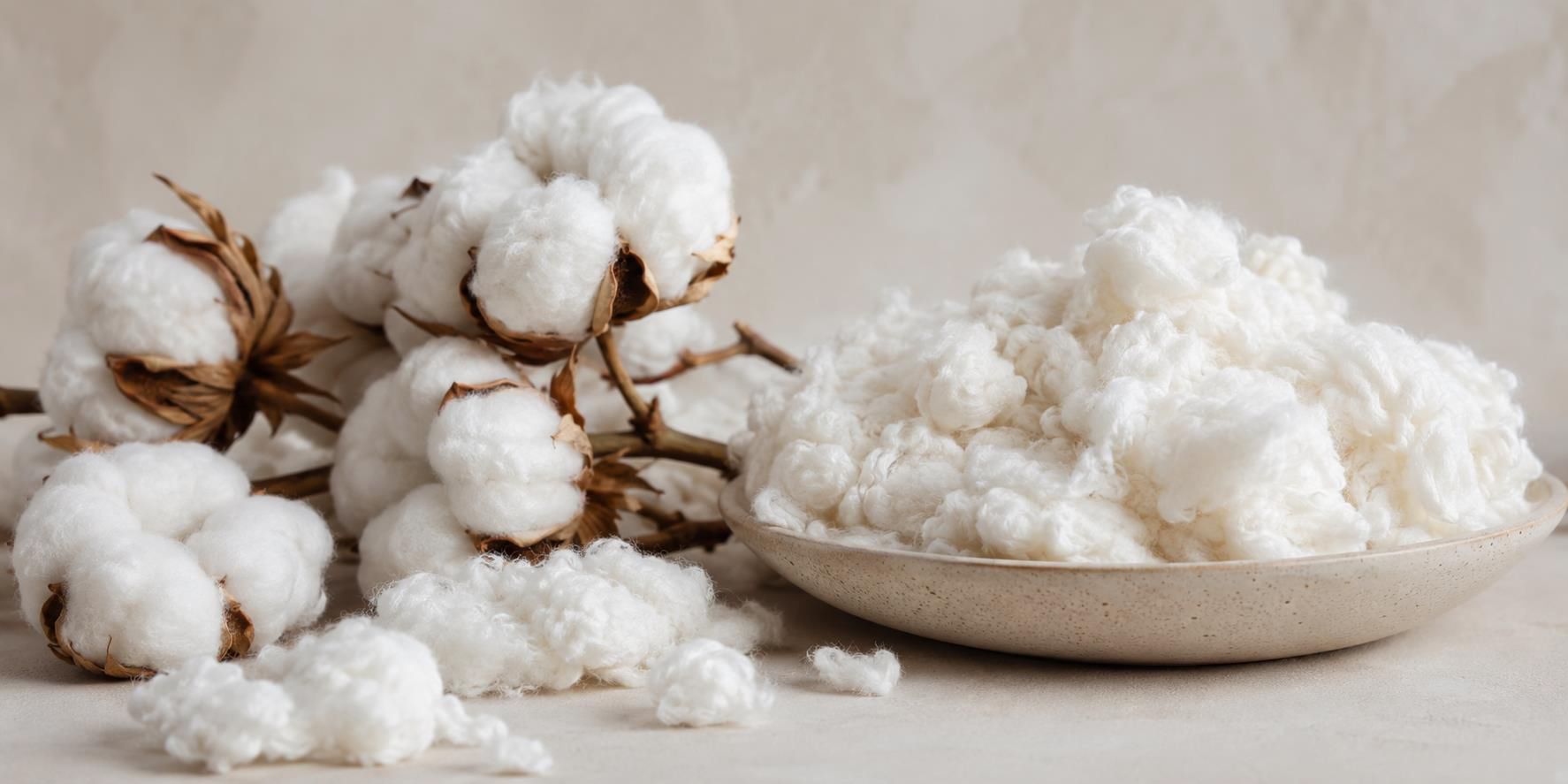
Before the spinning mill
- Cotton develops around the seeds of the cotton plant and is mechanically harvested when mature.
- Ginning separates the usable lint from seeds and larger plant material.
- The cleaned lint is compressed into dense bales for storage,testing and transport.
- Different bales may have slightly different fiber characteristics, so controlled blending helps create a more consistent yarn.
For you as a customer, this stage explains why “natural fiber” does not mean “untouched.” Cotton must be cleaned, evaluated and prepared carefully before it can become a smooth T-shirt yarn.
5. Production Journey II — Opening, Blending, Carding and Roving
At modern yarn-spinning facilities, bales are laid down together and thin layers of cotton are drawn from their tops. Industry experts explain that the fibers are blended in large air ducts, aligned and brought together into a carpet of cotton that is pulled into a large strand. That strand becomes sliver: a soft, untwisted rope of aligned fibers.
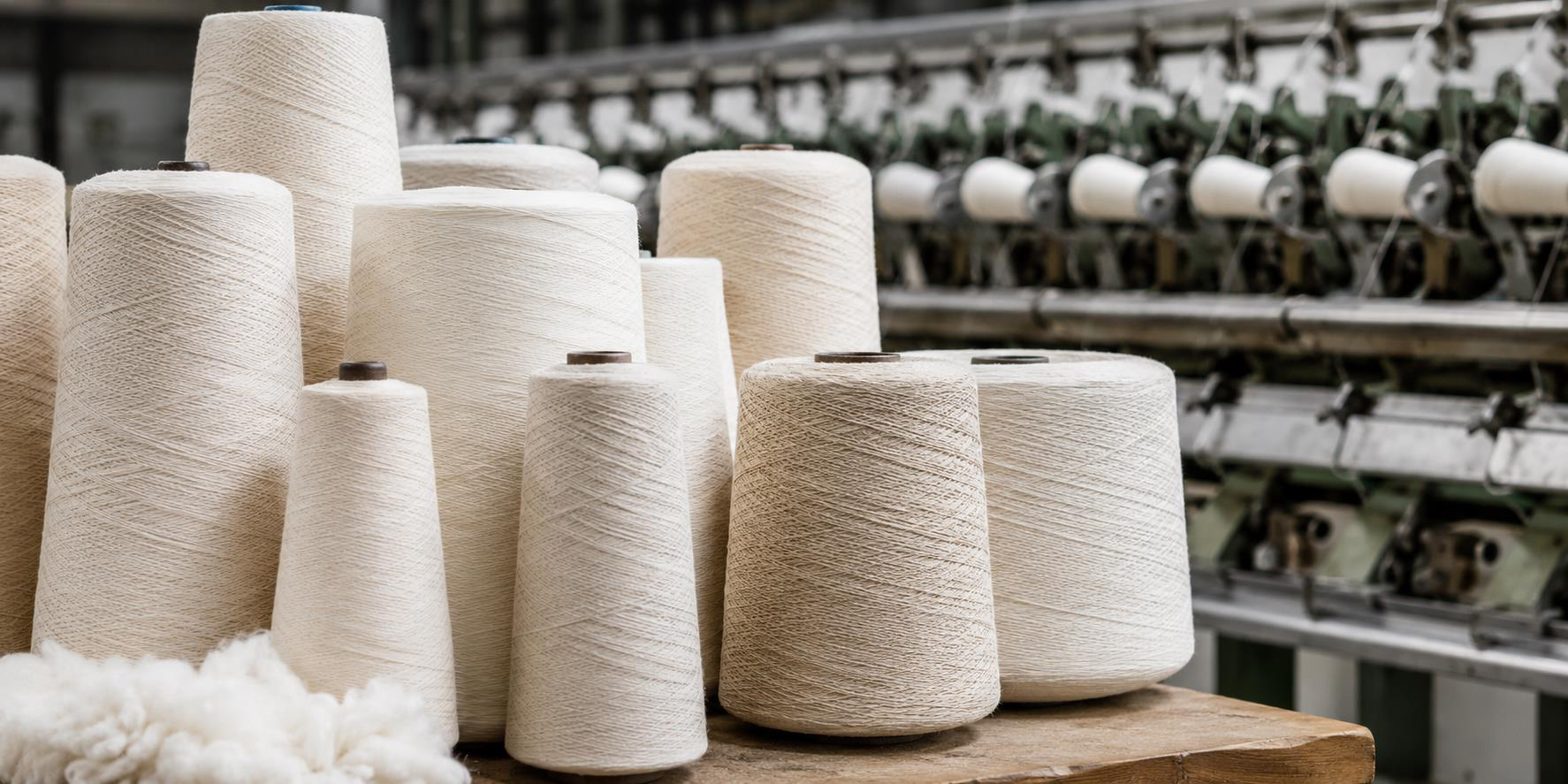
Why these preparation stages matter
- Opening loosens compacted cotton and helps remove remaining foreign material.
- Blending combines cotton from multiple bales to improve consistency.
- Carding separates and aligns fibers while forming a continuous sliver.
- Drawing combines several slivers and evens the strand further.
- For ring spinning, the material is normally reduced into roving—a finer, lightly twisted strand that can feed the ring frame.
This preparation is one reason ring-spun yarn can become fine and smooth. A ring frame cannot create a beautiful, even yarn from a badly prepared fiber strand. The quality you feel at the end depends on discipline at every earlier stage.
6. Production Journey III — The Ring-Spinning Difference
Ring spinning receives roving and passes it through drafting rollers that make the strand thinner and more even. A rapidly rotating spindle then inserts true twist into the drafted fibers. The ring-and-traveler mechanism controls the yarn while it winds onto a bobbin. Full bobbins are subsequently rewound into larger packages that can be used efficiently by knitting machines.
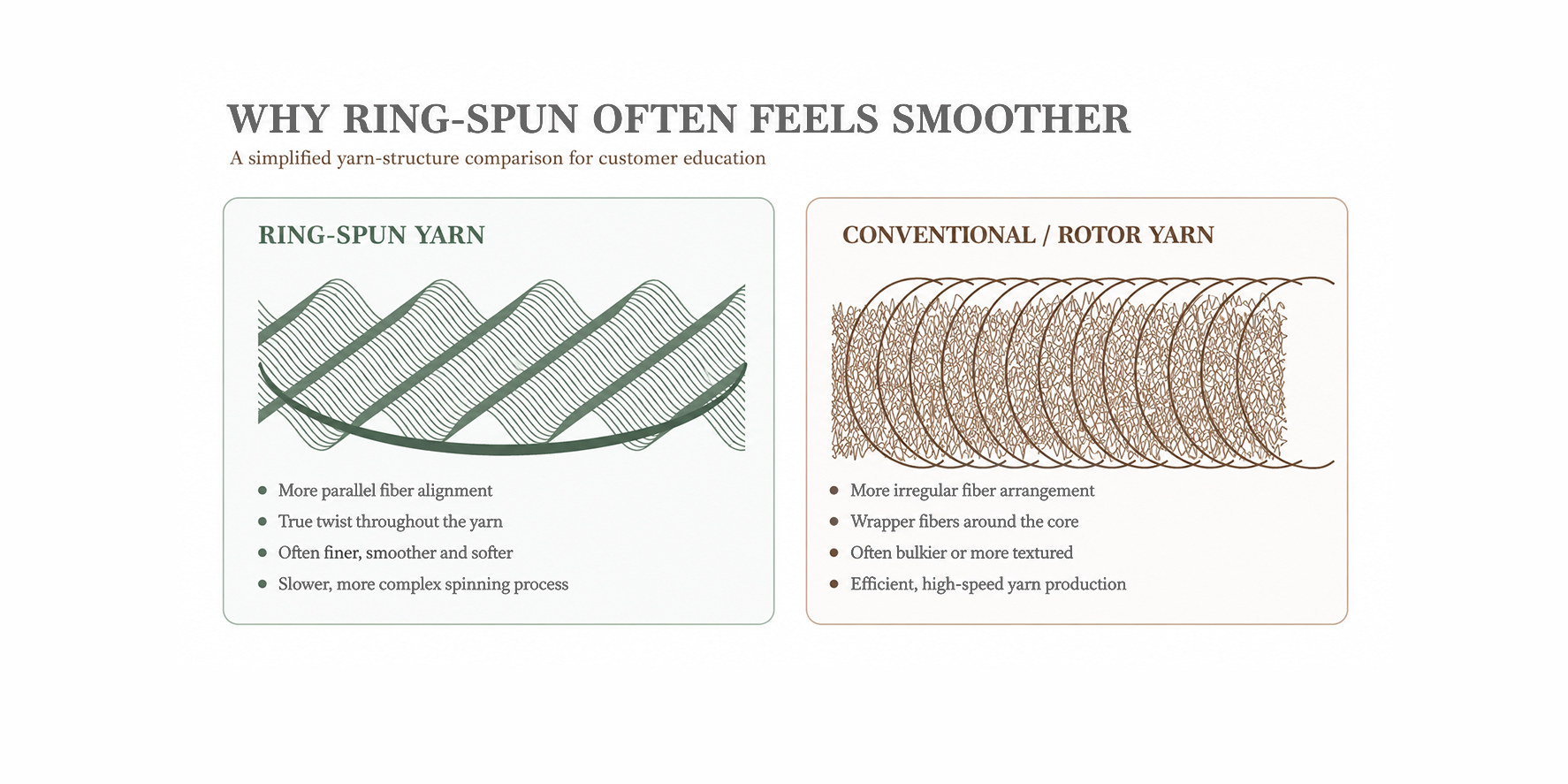
Why the method often costs more
- Ring spinning is slower than rotor/open-end production.
- It requiresadditional preparation and a separate winding stage.
- It is capable of a broad range of yarn counts, including finer yarns.
- The resulting hand is widely valued for softness and refinement.
This does not mean every ring-spun shirt is automatically superior to every other cotton shirt. Fabric weight, stitch density, finishing, garment construction and care still matter. Ring spinning gives the manufacturer a smoother yarn foundation; the rest of the product must still be made well.
7. Production Journey IV — Knitting, Dyeing and Stabilizing the Jersey
Standard production processes state that yarn arriving at textile facilities is loaded onto knitting machines and converted into rolls of fabric. For a classic T-shirt, the yarn is knitted into jersey—a looped structure that gives the fabric its characteristic flexibility and soft drape.
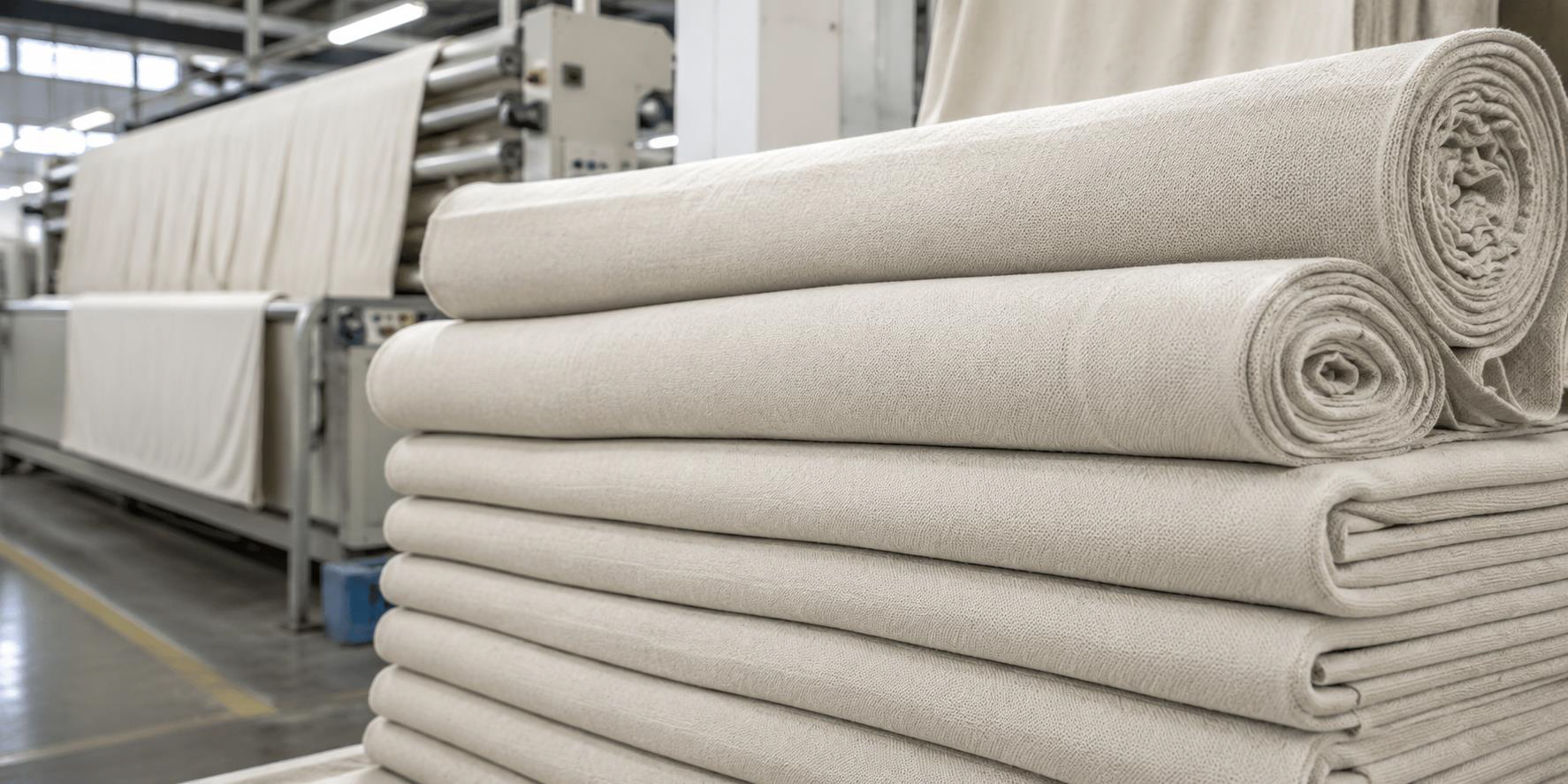
From greige fabric to stable colored jersey
- The newly knitted fabric is rinsed to remove processing residues.
- It is dyed in dye jets, where controlled temperature and circulation produce the selected color.
- The fabric is stabilized so dimensions and surface become more predictable.
- It is dried and compressed to the intended density.
- Automated cutting equipment creates the garment panels that will later be sewn.
This is also where weight, density and finishing strongly influence what you feel. Two shirts may both use ring-spun cotton but feel different because one is lighter, more compact, more heavily finished or cut in a different silhouette.
8. Production Journey V — Sewing, Quality Control and the Printable Surface
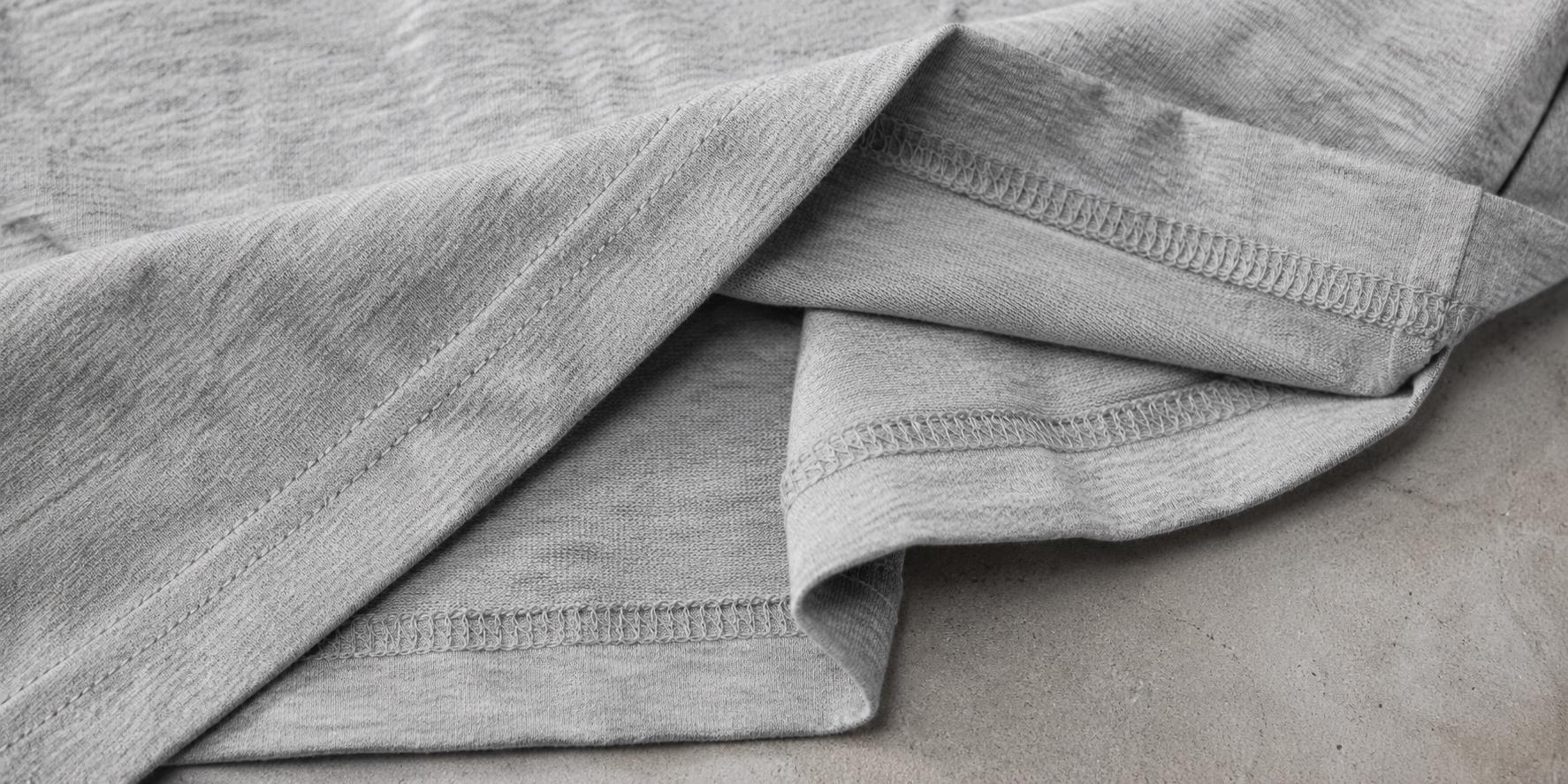
Cut garment parts are transported to sewing operations, where specialist teams assemble sleeves, shoulders, necklines, body seams and hems. Quality standards dictate each garment receives an in-house quality-control check before packaging. The taped neck and shoulders featured on high-quality tees are construction details intended to support comfort and durability.
Where Bazaar Of Designora enters the story
The blank T-shirt is only one part of your finished product. Our artwork is then applied by the relevant production partner using the decoration method specified for that item. A smooth ring-spun surface is particularly useful for detailed prints because it offers a more even base than a visibly coarse yarn surface. However, the final print result also depends on artwork preparation, pretreatment, ink, curing and production quality—not only on the cotton yarn.
What we check in the customer experience
- The product page muststate the actual fiber composition for the selected color.
- The fabric should feel consistent with its advertised weight and style.
- Seams,hems and neckline construction should sit cleanly without obvious distortion.
- Care guidance should protect both the cotton fabric and the printed design.
9. Your Practical Buying and Care Guide
Choose ring-spun cotton when you want…
- A smoother, softer everyday T-shirt surface.
- A refined casual appearance rather than a visibly coarse, rustic hand.
- A fabric that can support detailed printedartwork well.
- The familiar breathability and natural touch of cotton.
Remember its honest limitations
- Ring-spun cotton is not automaticallymoisture-wicking.
- It can absorb sweat, become heavier when wet and dry more slowly than performance polyester.
- High washing and drying temperatures can increase shrinkage and stress the print.
- The exact feel still depends on the specific style, color, fabricweight and finish.
Care recommendation from us
Wash the T-shirt inside out in cool to warm water with similar colors. Use a gentle cycle, avoid harsh bleach unless the product instructions explicitly allow it, and keep dryer heat moderate. Air drying or low heat is kinder to cotton dimensions and printed artwork. Iron only when needed, preferably from the reverse side and never directly over a print unless the care label permits it.
The clearest definition
100% ring-spun cotton means the main fabric is entirely cotton and that the cotton was made into yarn using the ring-spinning method.
Our customer promise
We will distinguish solid 100% cotton colors from heather or grey blends and describe the specific product honestly rather than treating every color as identical.
10. All our products made from 100% Ring-Spun Cotton:
-
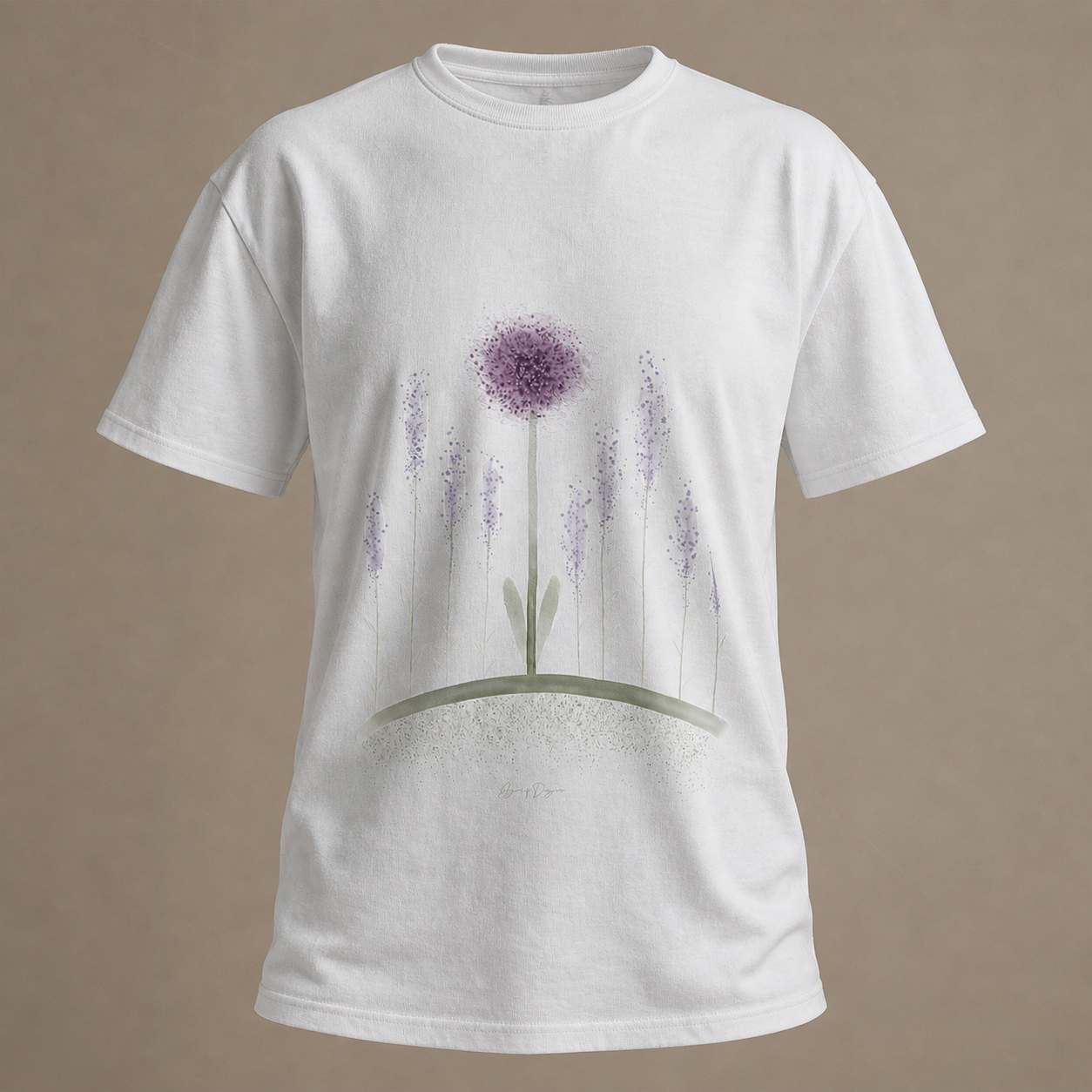
Allium & Lavender | T-Shirt
€65.00 -
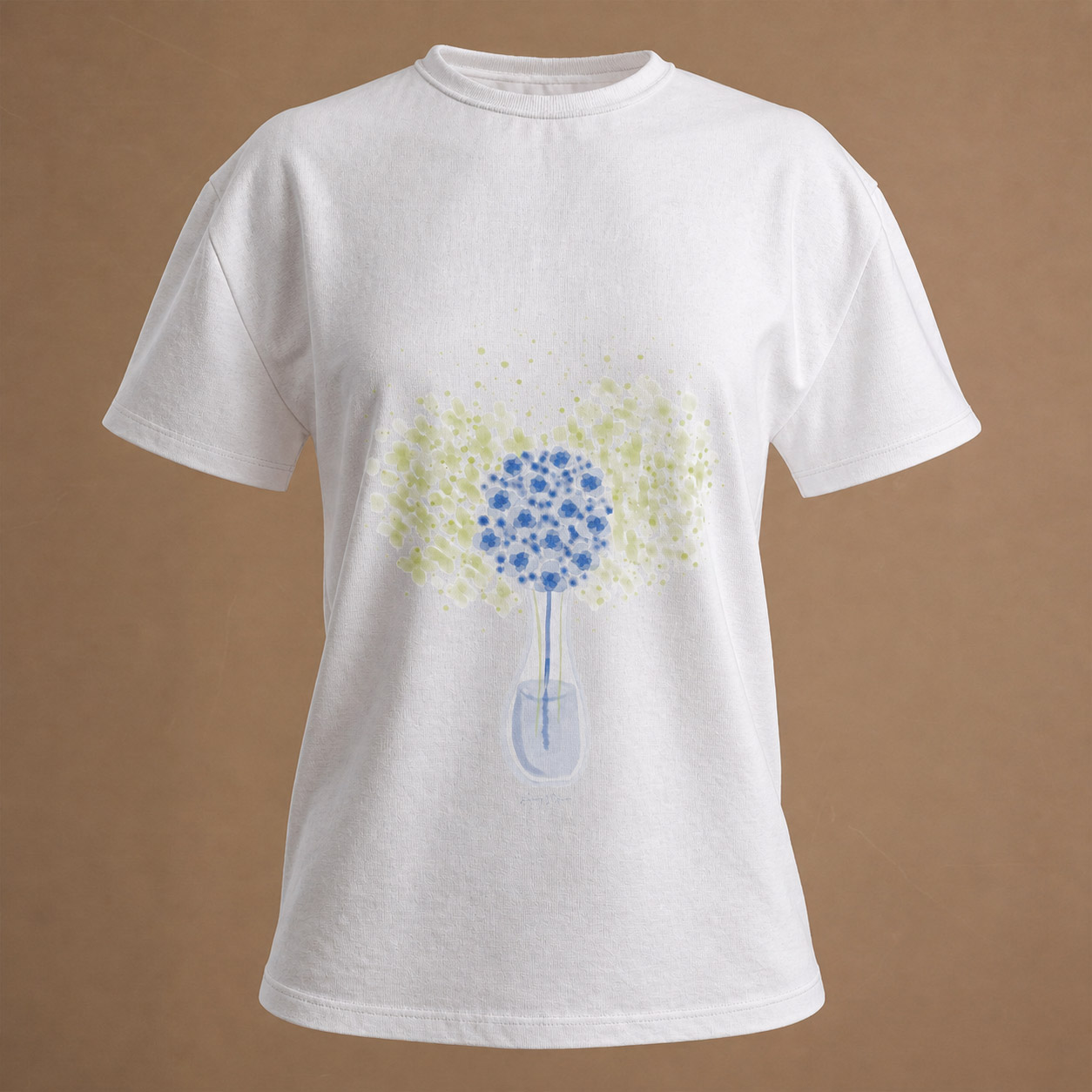
Blue & Green Hydrangea | T-Shirt
€65.00 -
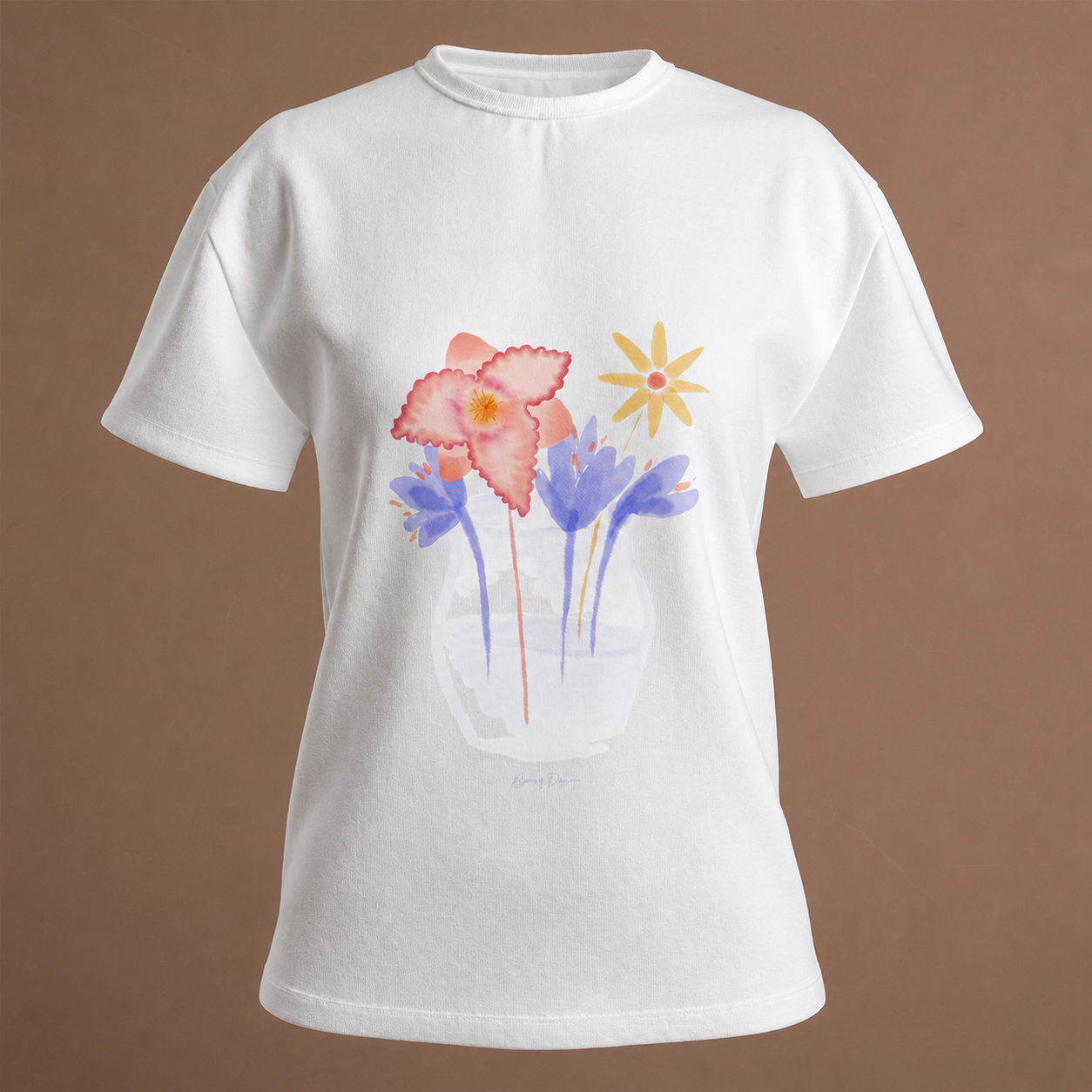
Crocus, Lilies & Coreopsis | T-Shirt
€65.00 -
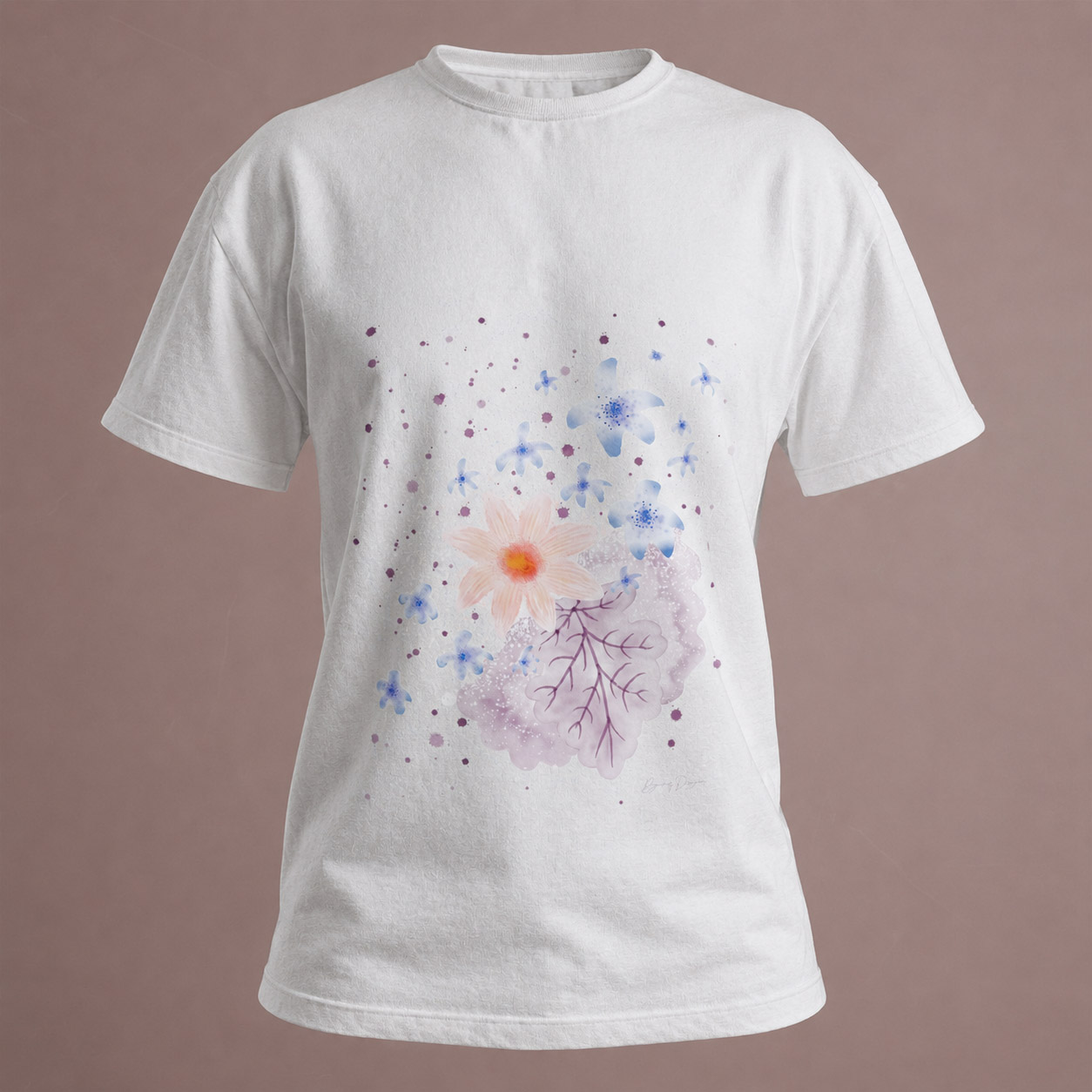
Delphiniums, Dahlias & Heuchera | T-Shirt
€65.00 -
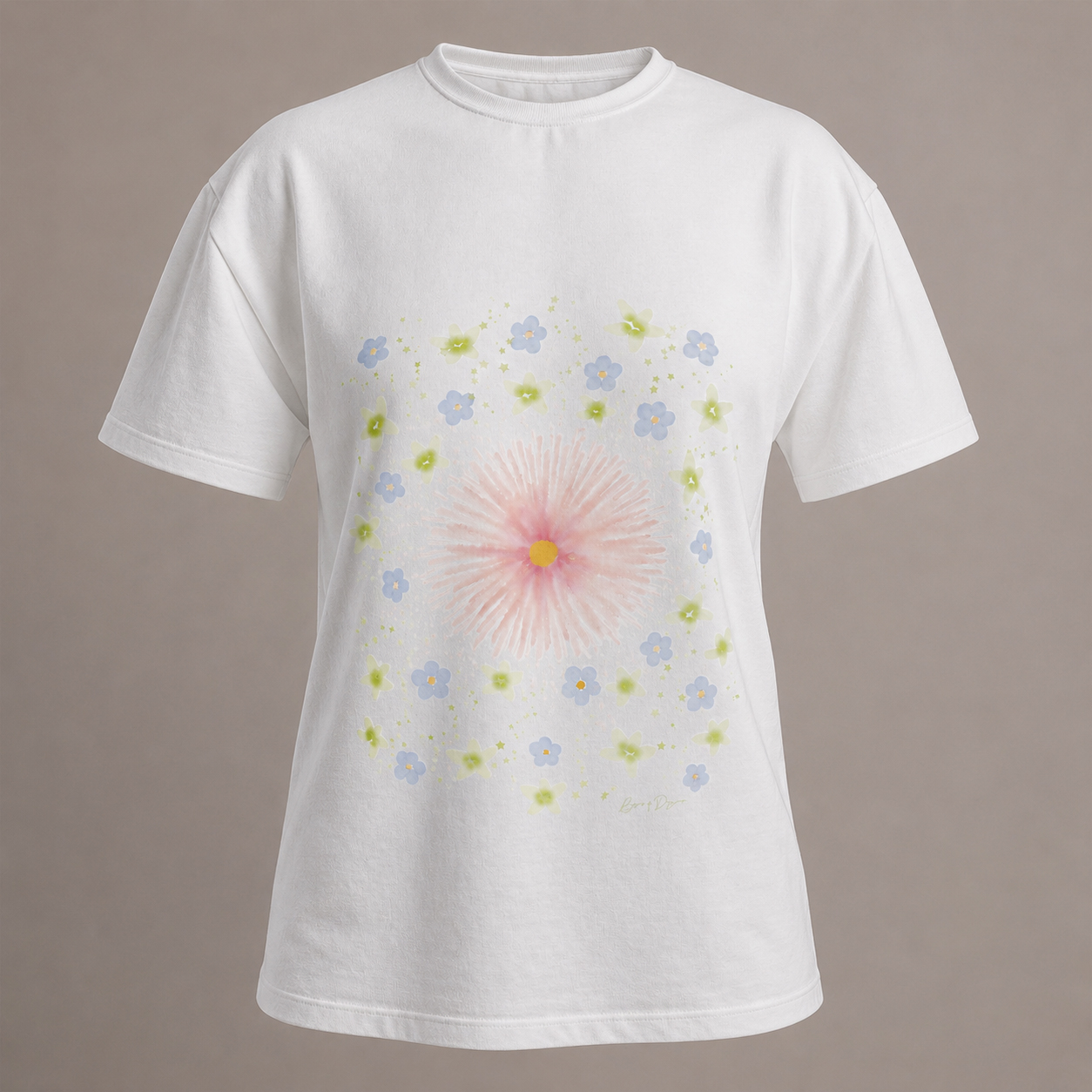
Forget-Me-Not, Daisy & Nicotiana alata | T-Shirt
€65.00 -
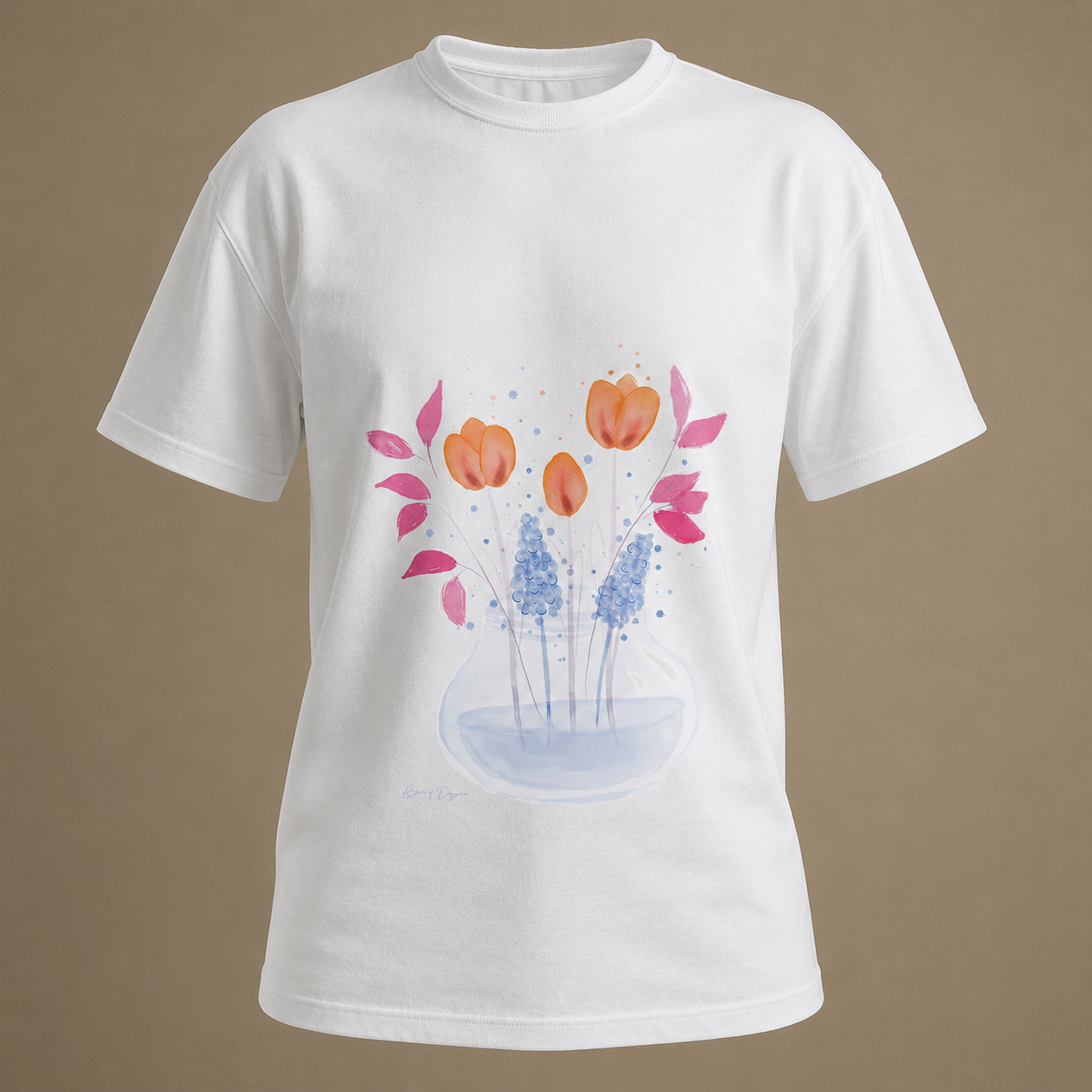
Muscari, Tulips & Bougainvillea | T-Shirt
€65.00 -
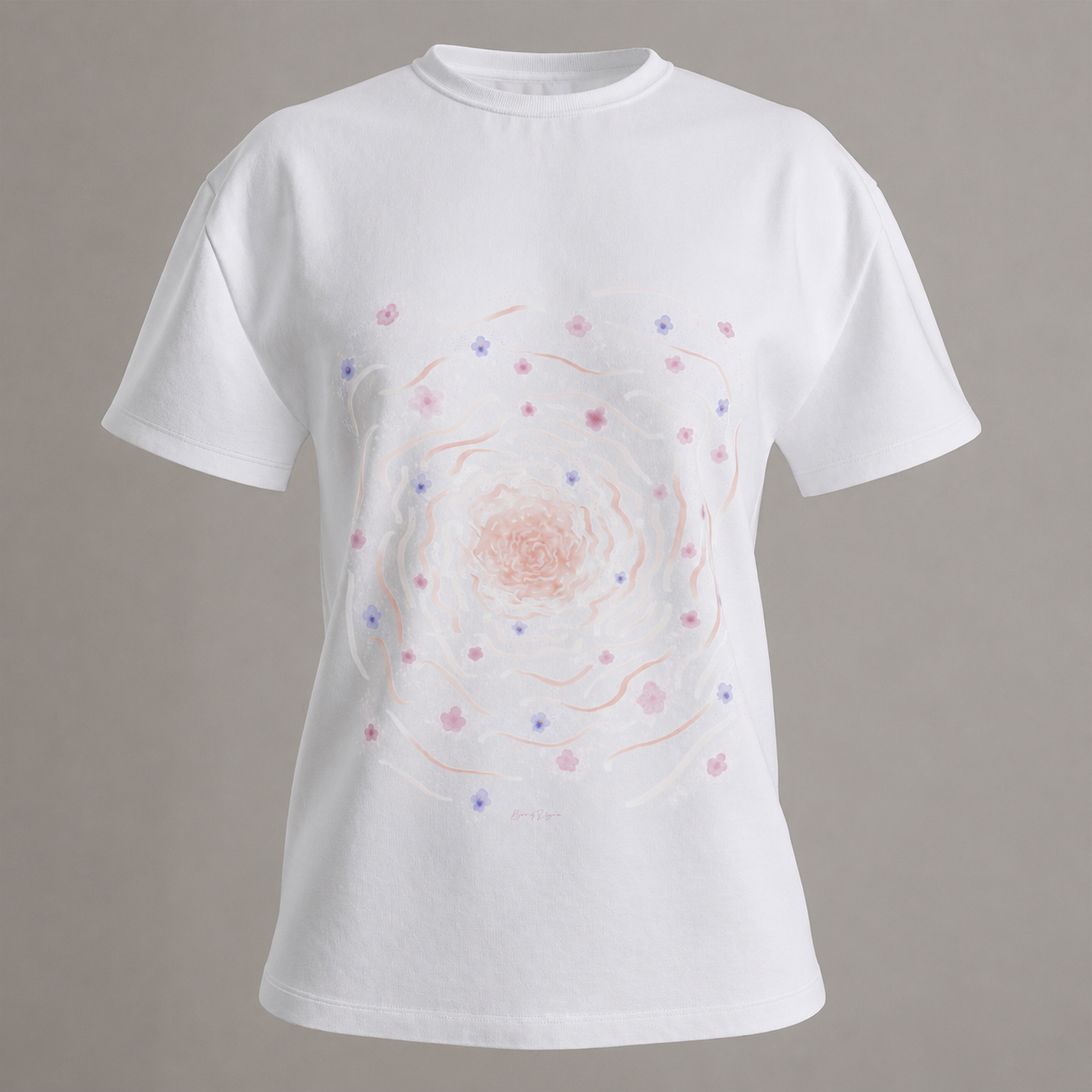
Pansies, Impatiens & Carnations | T-Shirt
€65.00 -
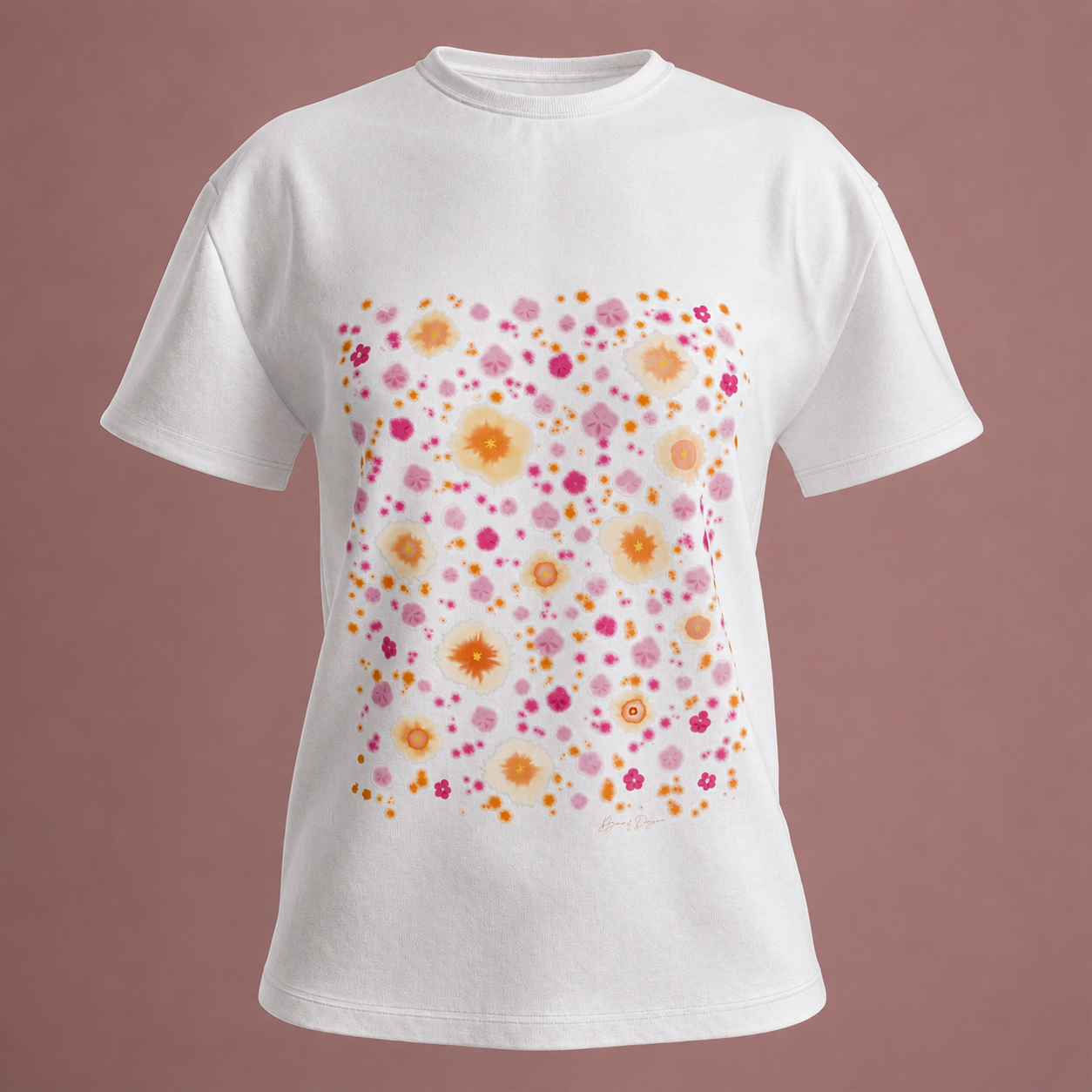
Petunias, Poppy & Phlox | T-Shirt
€65.00 -
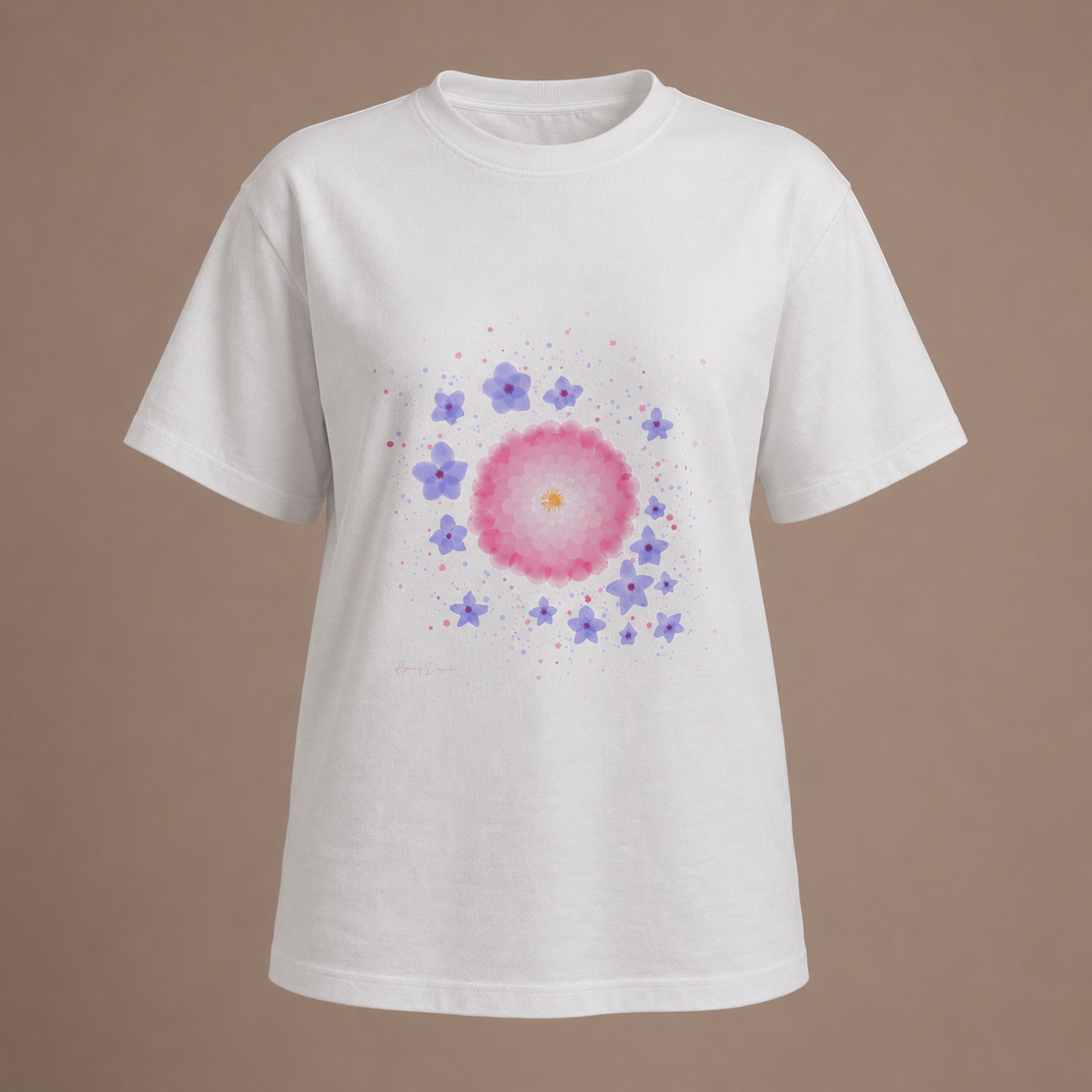
Phlox & Zinnia | T-Shirt
€65.00 -
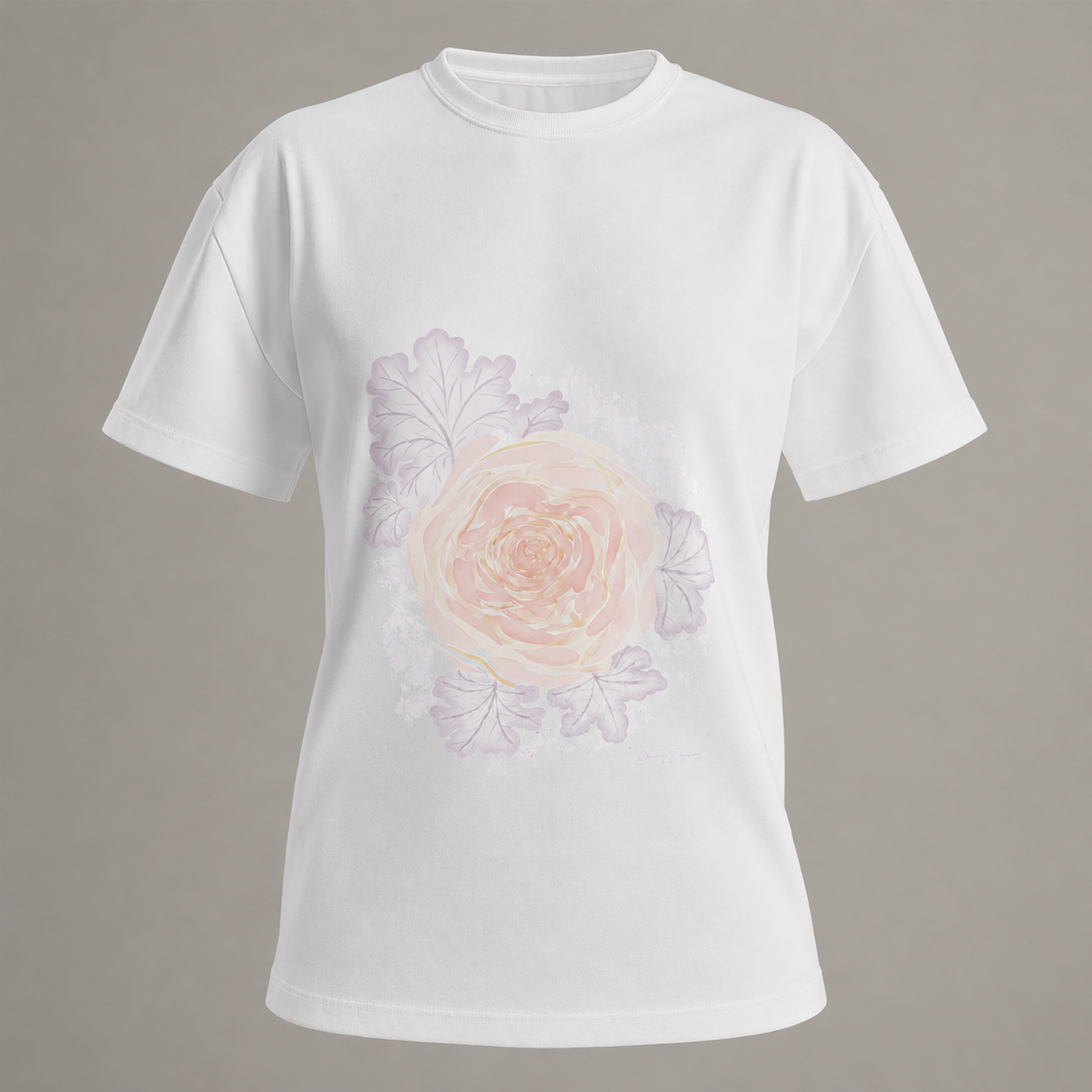
Rose & Heuchera | T-Shirt
€65.00