

A simplified production view of pigment ink being deposited directly onto a cotton garment.
At Bazaar Of Designora, we believe the beauty of a printed product should be supported by clear, honest information. DTG means direct-to-garment: a digital printer applies water-based pigment ink directly to the textile, much like a highly specialized inkjet system designed for fabric. The method is especially valuable for detailed artwork, soft gradients, fine lines and short on-demand production runs. (1)(3)
Garment color, fiber content, texture, pretreatment, white-ink coverage, color coverage and curing all affect the final appearance and hand feel. We therefore explain realistic expectations rather than describing every DTG print as identical.
What DTG does especially well
Detailed color transitions, photographic imagery, watercolor-style artwork, individualized orders and small production quantities without making a separate screen for every color.
What DTG does not guarantee
An invisible print in every case. Dense designs and dark garments that require a white underbase can feel more noticeable than light, open designs on pale cotton.
1. What makes DTG pigment printing different?
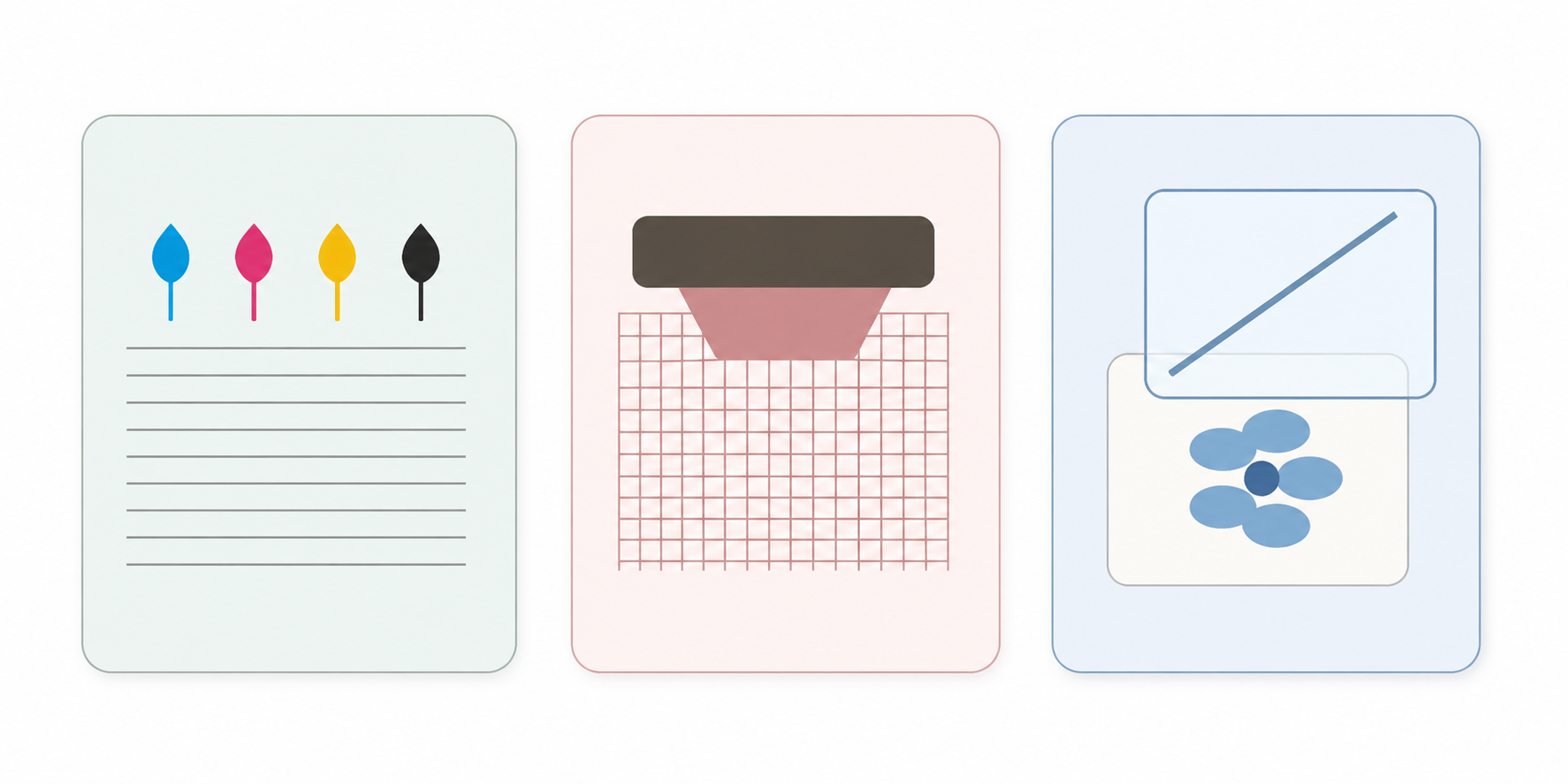
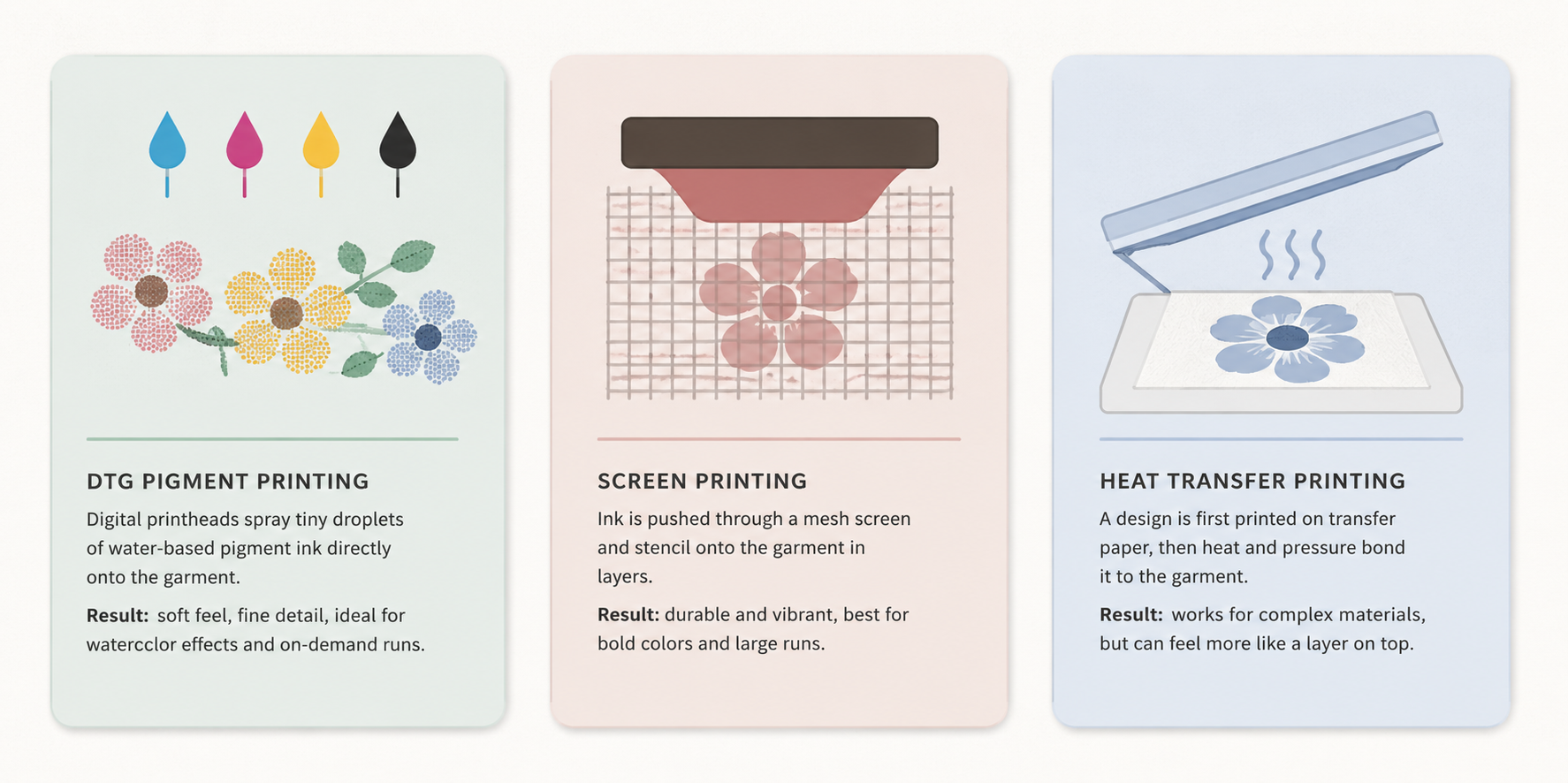
Three simplified approaches: ink printed into the garment surface, ink pushed through a screen, and a printed transfer bonded on top.
The key difference is the route the decoration takes to reach the garment. With DTG, digital printheads place tiny droplets of pigment ink directly onto the textile. Screen printing uses a stencil and mesh screen to push ink onto the garment. Heat-transfer methods first create an image on another carrier, then use heat and pressure to bond it to the product. None of these methods is automatically “best” for every design; each has strengths.
| Method | How it works | Typical customer experience |
| DTG pigment | Digital file; no separate physical screen for each color. White underbase may be used on dark garments. | Excellent for intricate detail, gradients and one-off or short-run work. Hand feel varies with coverage. |
| Screen print | Ink is pushed through prepared mesh screens, usually one screen per color or print layer. | Highly efficient at volume; can be soft or substantial depending on ink system and deposit. |
| Transfer / DTF | The image is printed on a carrier and bonded with heat, commonly with an adhesive layer. | Broad fabric compatibility and crisp color; usually a more noticeable surface layer. |
Sublimation is different again: dye bonds with suitable polyester and normally leaves almost no surface feel, but it is limited to compatible polyester products and usually lighter base colors.
Why this matters to you
The printing method affects detail, color, texture, breathability, minimum order size and how the decorated area feels. We select DTG when its strengths match the artwork and the chosen garment rather than treating it as a universal replacement for every other method.
2. Wear and aesthetics: how will your print look?
Close-up illustration of pigment color over visible cotton knit, with a magnified texture area.
DTG is capable of very fine visual information because the artwork is processed digitally and printed through small ink droplets. That makes it well suited to our complex florals, delicate line work, soft tonal changes and watercolor-inspired designs. High-resolution source artwork matters: a printer can reproduce detail that exists in the file, but it cannot restore clarity that was never present.
- On a light garment, many darker designs can be printed with CMYK pigment ink directly onto the fabric, which often produces the lightest hand feel.
- On a dark garment, a whiteunderbase is usually required so the colored inks remain visible and accurate. Pretreatment helps that white layer stay near the fabric surface. (1)(3)
- The garment textureremains visible through many prints. Fine jersey tends to support smoother detail than a coarse, fuzzy or highly uneven surface.
- Large solid-color areas use more ink and usually feel more present than open artwork with negative space.
Pigment interacts with textile color and texture, so the printed result can differ from a backlit screen or coated paper. We treat that textile character as part of the design.
Best visual match
Watercolor effects, botanical detail, photographs, gradients, multicolor illustrations and designs that change frequently.
Possible limitations
Very exact fluorescent colors, metallic effects, extremely heavy special effects and some spot-color workflows may be better served by another print method.
3. Sensory experience and weather comfort
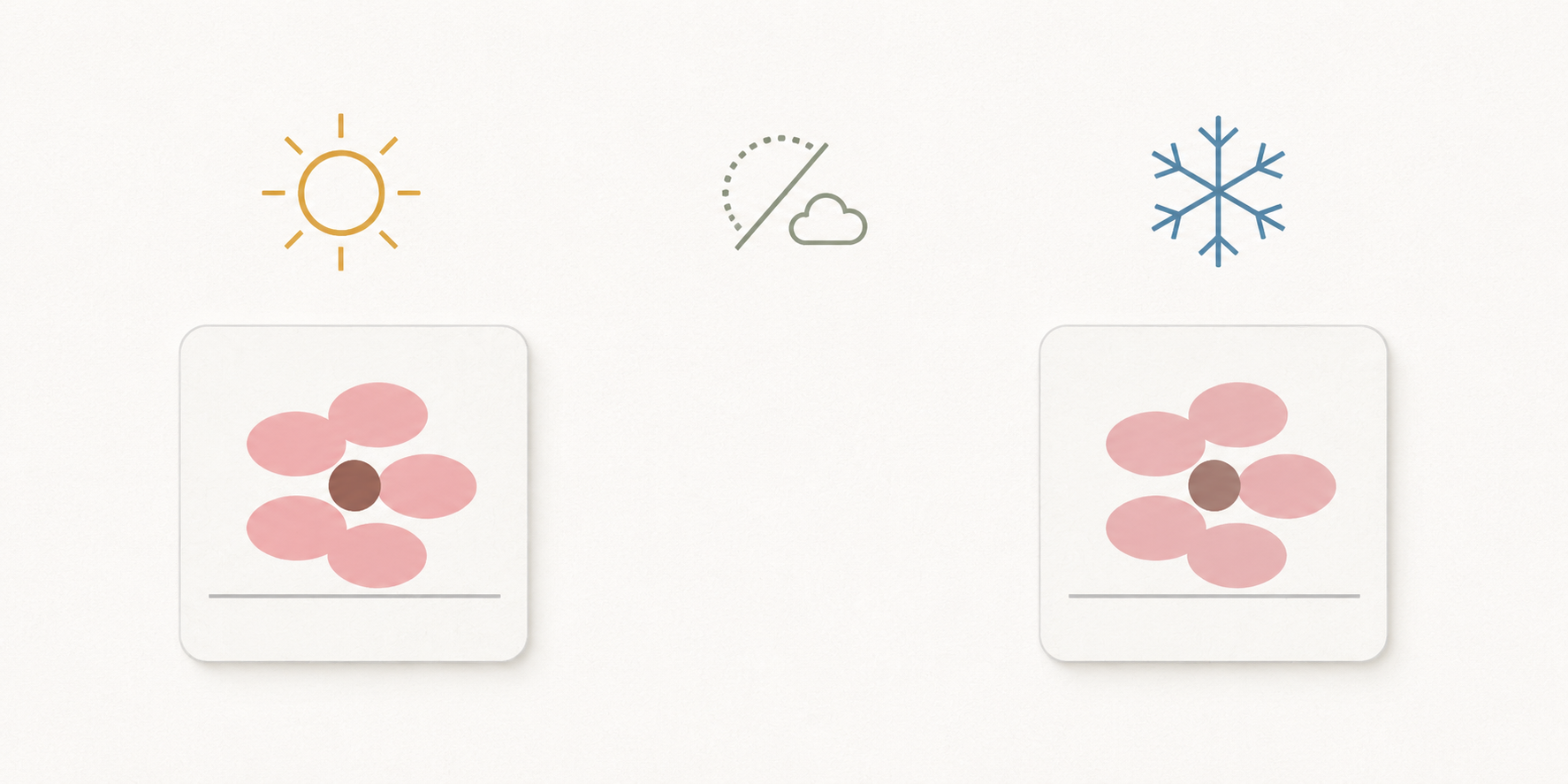
A visual study of printed cotton swatches and hot, mild and cold weather conditions.
How a DTG print feels against your skin depends on the garment and the print recipe. CMYK-only printing on a pale cotton garment can feel very light because the ink follows the surface of the fibers. A dark garment may need pretreatment and a white underbase, creating a more noticeable printed zone. Dense white and color coverage will generally feel more substantial than a small, open design.
What remains comfortable
The unprinted fabric keeps its original softness and flexibility. DTG is normally less film-like than many transfer methods, especially when the artwork contains open space.
What you may notice
A large, heavily inked rectangle can reduce airflow locally and feel firmer until it softens through wear and washing. Curing conditions also influence the final hand.
How it feels across the seasons
- Hot weather: the garment fabricremains the main driver of comfort. A small or open print is less noticeable; a large, dense print can feel warmer over the decorated area.
- Mild weather: DTG works comfortably for everyday layering because the printremains flexible and the garment behaves much as it did before decoration.
- Cold weather: the print does not add meaningful insulation. Warmth comes from the garment weight and the layers you wear with it.
DTG usually preserves more textile character than a thick transfer, but the ink does not physically disappear. Print size, coverage and garment color still matter.
4. Washing cycles, aging and care
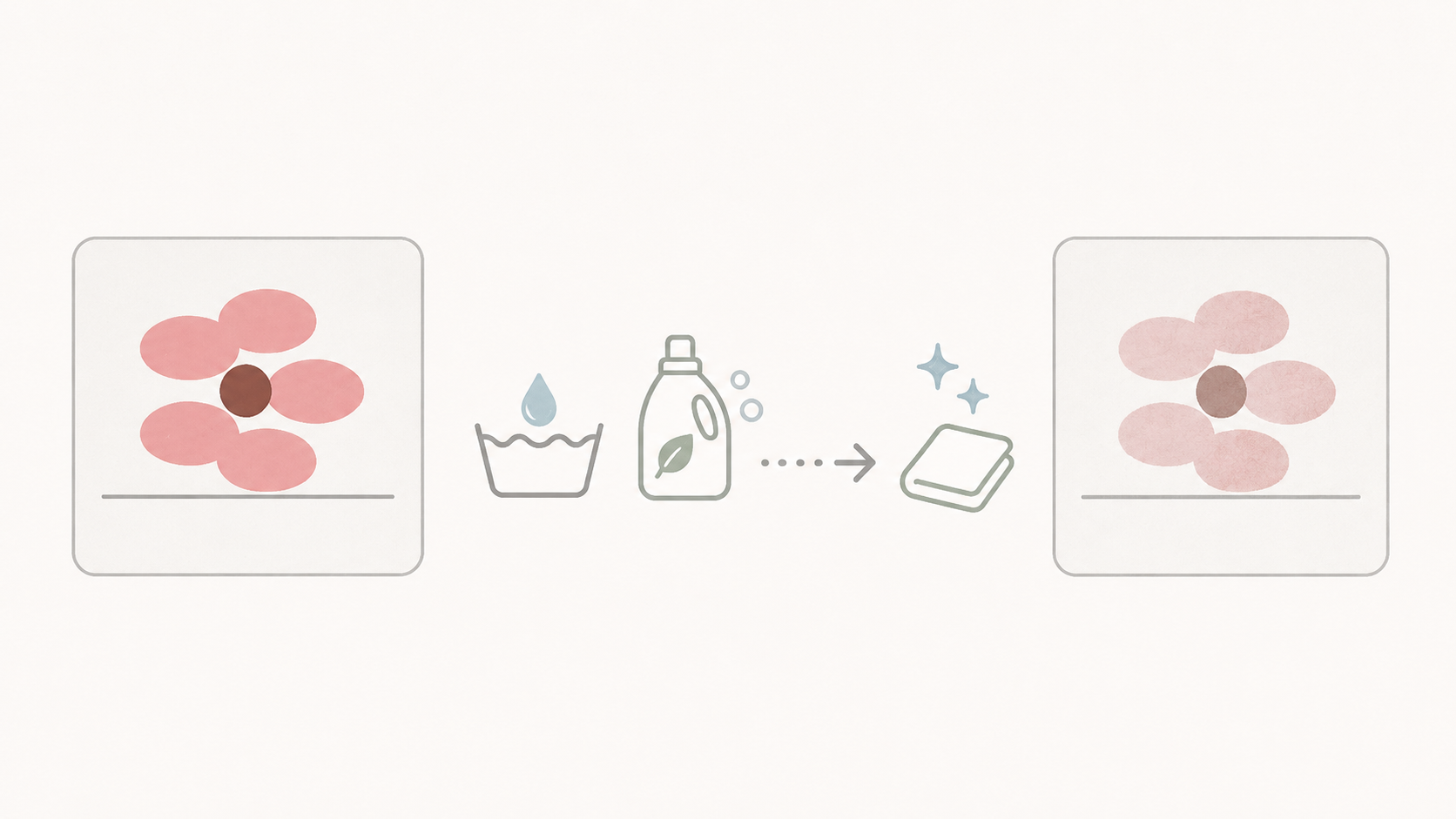
A simplified wash-aging study: pigment prints can remain attractive while gradually softening and developing natural wear.
A properly cured DTG pigment print is designed to withstand repeated laundering. Brother states that a properly cured GTX print can provide wash durability similar to properly cured water-based screen printing, and its pigment inks have achieved an AATCC durability score of 4.0 or greater in the cited test. (4) That does not mean a print will remain visually identical forever. Friction, detergent, water temperature, tumble heat, garment quality and the number of washes all affect aging.
|
Care step |
Why it helps |
|
Wash inside out |
Reduces direct abrasion between the printed surface, the drum and other garments. |
|
Use cold water |
Helps limit stress on the garment, pigment layer and fabric color. Epson also recommends cold-water inside-out washing for printed T-shirts. [5] |
|
Choose mild detergent |
Avoids unnecessarily aggressive chemistry. Do not use chlorine bleach unless the garment supplier explicitly permits it. |
|
Dry gently |
Air dry or use low tumble heat. High heat repeatedly stresses both the textile and the decoration. |
|
Do not iron the print directly |
Direct heat and pressure can change the surface. Iron from the reverse side when the garment care label allows it. |
Gradual softening and slight fading are normal. Rapid cracking, flaking or ink loss after very few washes may indicate inadequate curing, an unsuitable garment, incorrect pretreatment or harsh care. Brother warns that under-curing can cause early cracking. (6)
Our practical promise
We describe DTG as durable when it is produced and cared for correctly, not indestructible. A printed garment is still a textile product, and gentle care gives both the fabric and the artwork the best chance to age beautifully.
5. Production journey — artwork, color and garment selection
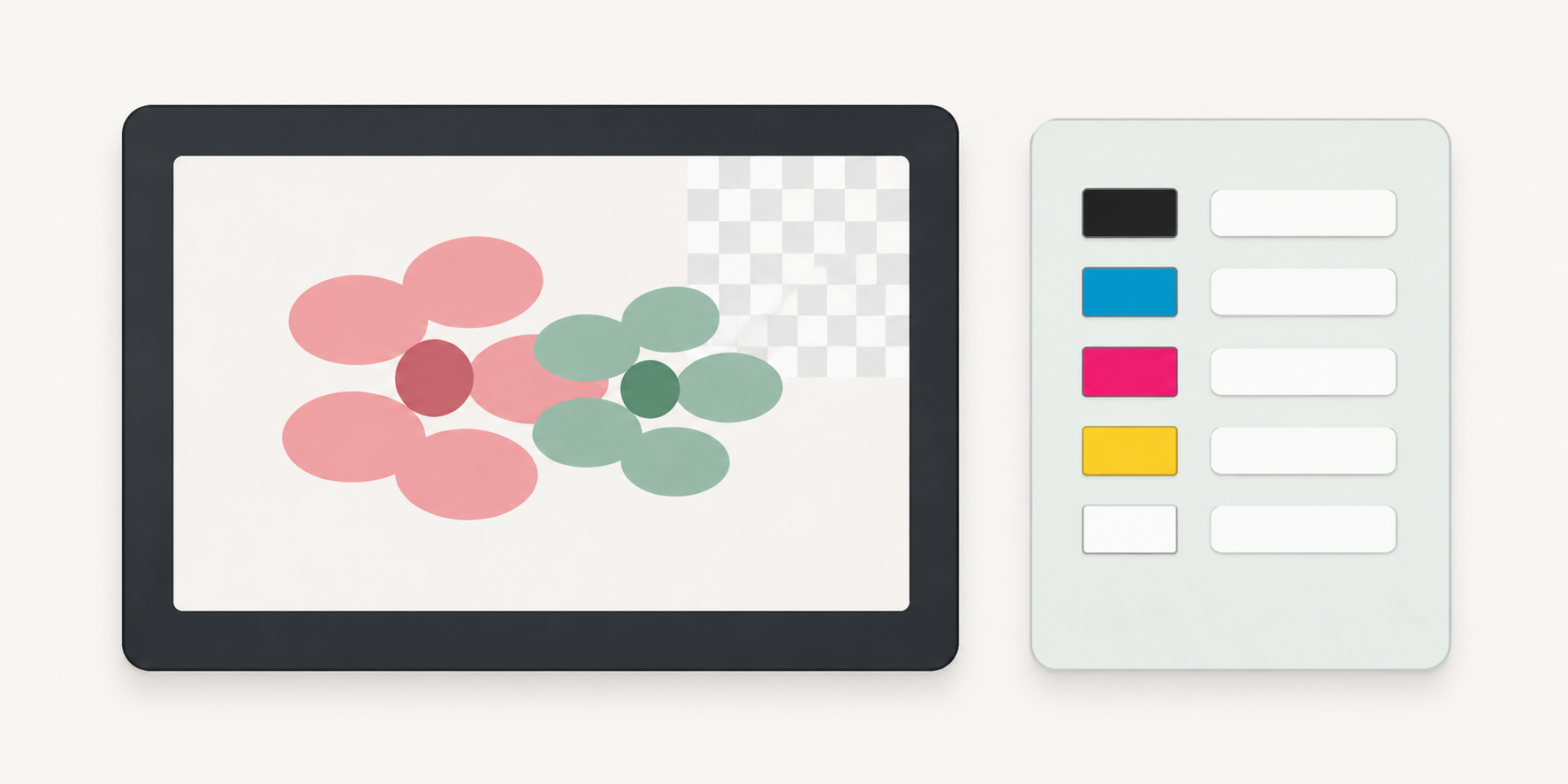
A simplified digital-preparation stage: artwork is checked, separated into print channels and matched to the garment.
Every DTG print begins with a digital file. Before any ink reaches fabric, the artwork must be prepared for the specific garment, print size and printer workflow. This usually includes checking resolution, transparency, color relationships, edge quality and the position of the design. RIP software then translates the artwork into instructions for the printer, including the white underbase and color passes when required.
Step by step
- Artwork review: we confirm that the file contains enough detail for the intended print size and that transparent areas are genuinely transparent.
- Color preparation: the digital image is converted into the printer’s available ink channels. Screen and garment colors can influence the perceived result, so test prints may be needed.
- Garment selection: cotton and cotton-rich fabrics are common DTG choices. Surface smoothness, fiber content, dye stability and heat tolerance all matter. Epson recommends cotton and cotton/polyester blends for standard DTG workflows. (5)
- Placement and scale: the design is positioned for the actual product dimensions rather than enlarged automatically without regard for proportions.
This stage matters because print quality begins before production. A beautiful printer cannot correct a low-resolution file, unsuitable blank or poorly chosen print size. Thoughtful preparation is what turns a digital design into a textile design.
Transparency note
The color you see on a backlit monitor cannot be reproduced perfectly on every fabric. Textile printing has a physical color gamut, and the garment itself becomes part of the final visual result.
6. Production journey — pretreatment and surface preparation
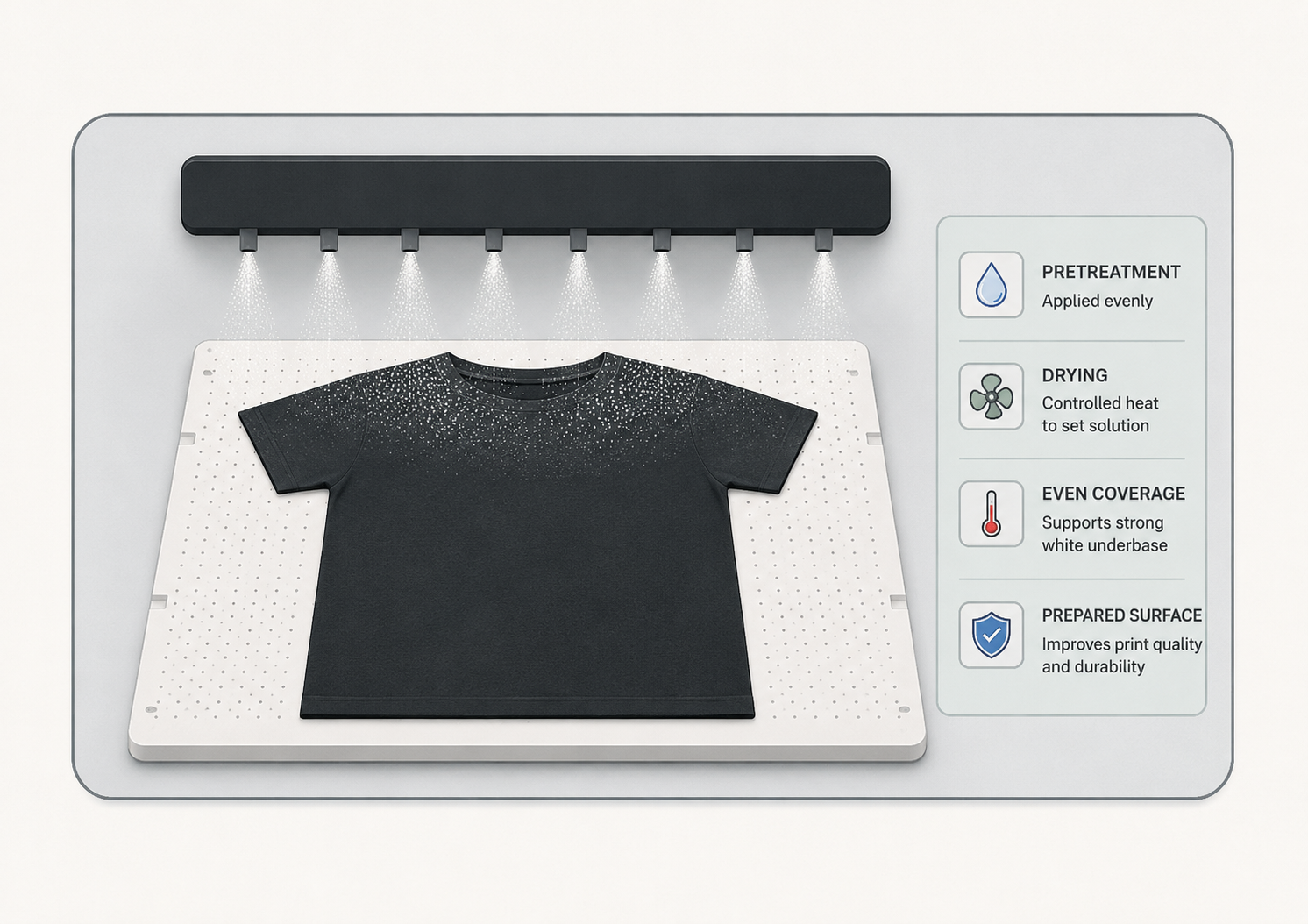
Pretreatment is applied evenly to a dark garment so the white underbase can remain defined near the surface.
Pretreatment is one of the most important and frequently misunderstood parts of DTG printing. It is a liquid preparation applied before printing, especially when white ink will be used on a dark garment. Brother explains that pretreatment creates a more even printing surface and helps keep white ink on top of the fibers, where it can form a clear underbase for the CMYK colors. (1)
What happens in this stage
- The garment is lint-rolled and placed flat so fibers, seams and wrinkles do not interfere with the print area.
- A controlled amount of pretreatment is sprayed or applied evenly. Consistency matters: too little can weaken opacity and wash durability, while too much can leave marks, stiffness or unwanted residue.
- The pretreatment is dried or heat-cured according to the ink and equipment manufacturer’s instructions. The process also helps flatten the print surface.
- Light garments printed only with darker CMYK artwork may not require the same white-ink pretreatment workflow; the exact procedure depends on the printer, ink, garment and desired result. (2)
The pretreatment can influence hand feel. A carefully applied amount should support the ink without turning the whole garment into a coated surface. On a dark garment with dense artwork, however, the combination of pretreatment and white ink will naturally be more noticeable than CMYK-only printing on a light shirt.
Why you may see small variations
Pretreatment reacts with fabric dyes and fiber surfaces. Professional production relies on measured application, temperature checks and wash testing, but slight differences can still occur between garment colors and batches.
7. Production journey — white underbase and CMYK pigment printing
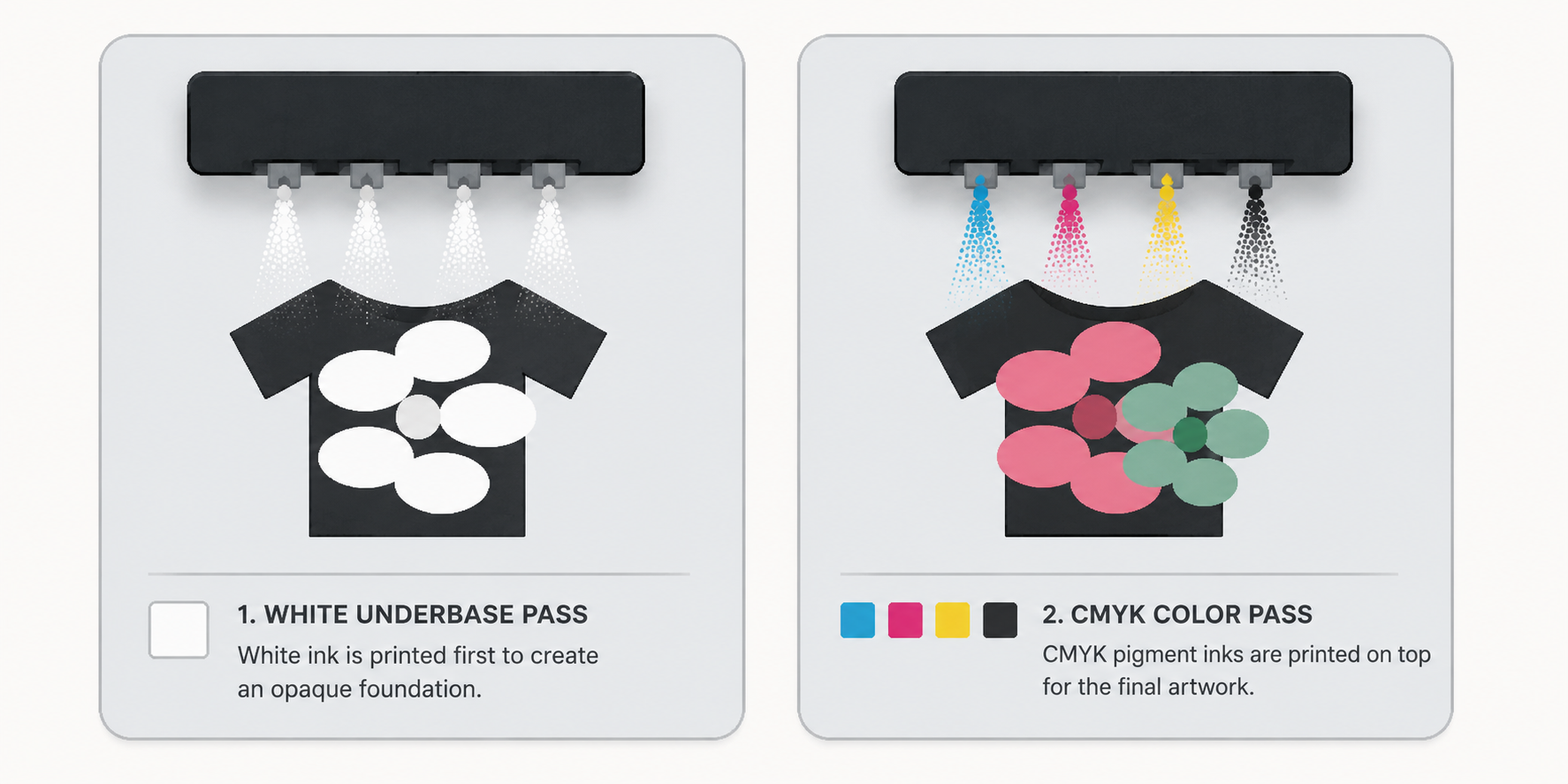
A dark garment often receives a white underbase first, followed by the color pass.
After preparation, the garment is loaded onto a platen and held flat. The printer then deposits ink according to the digital file. On pale garments, the process may use CMYK color ink without a white layer. On dark garments, white ink normally creates an underbase so semi-translucent CMYK colors do not disappear into the garment color. Pretreatment helps that white ink remain near the surface rather than soaking deeply into the fibers. (1)(2)
What the printer is doing
- Droplet placement: the printhead releases very small droplets in precise positions, building detail through repeated passes and controlled dot patterns.
- White pass: on dark products, the printer lays down the white foundation in the areas where color needs support.
- Color pass: cyan, magenta, yellow and black pigments combine optically to create the artwork’s tones and gradients.
- Ink coverage control: the RIP balances opacity, detail and hand feel. More ink may increase saturation or opacity, but it can also make the print feel heavier.
DTG pigment inks are commonly water-based formulations containing pigment and binding components. The water is the carrier during printing; curing later removes the carrier and helps the binder secure the pigment to the garment. Specific chemistry differs by manufacturer, so the approved ink, pretreatment and cure recipe should be treated as one system.
Light garment resultOften the softest DTG feel because the fabric can show through the CMYK color without a dense white foundation. |
Dark garment resultStronger opacity and color contrast, but a more noticeable printed area because pretreatment and white ink are part of the structure. |
8. Production journey — curing, inspection and release
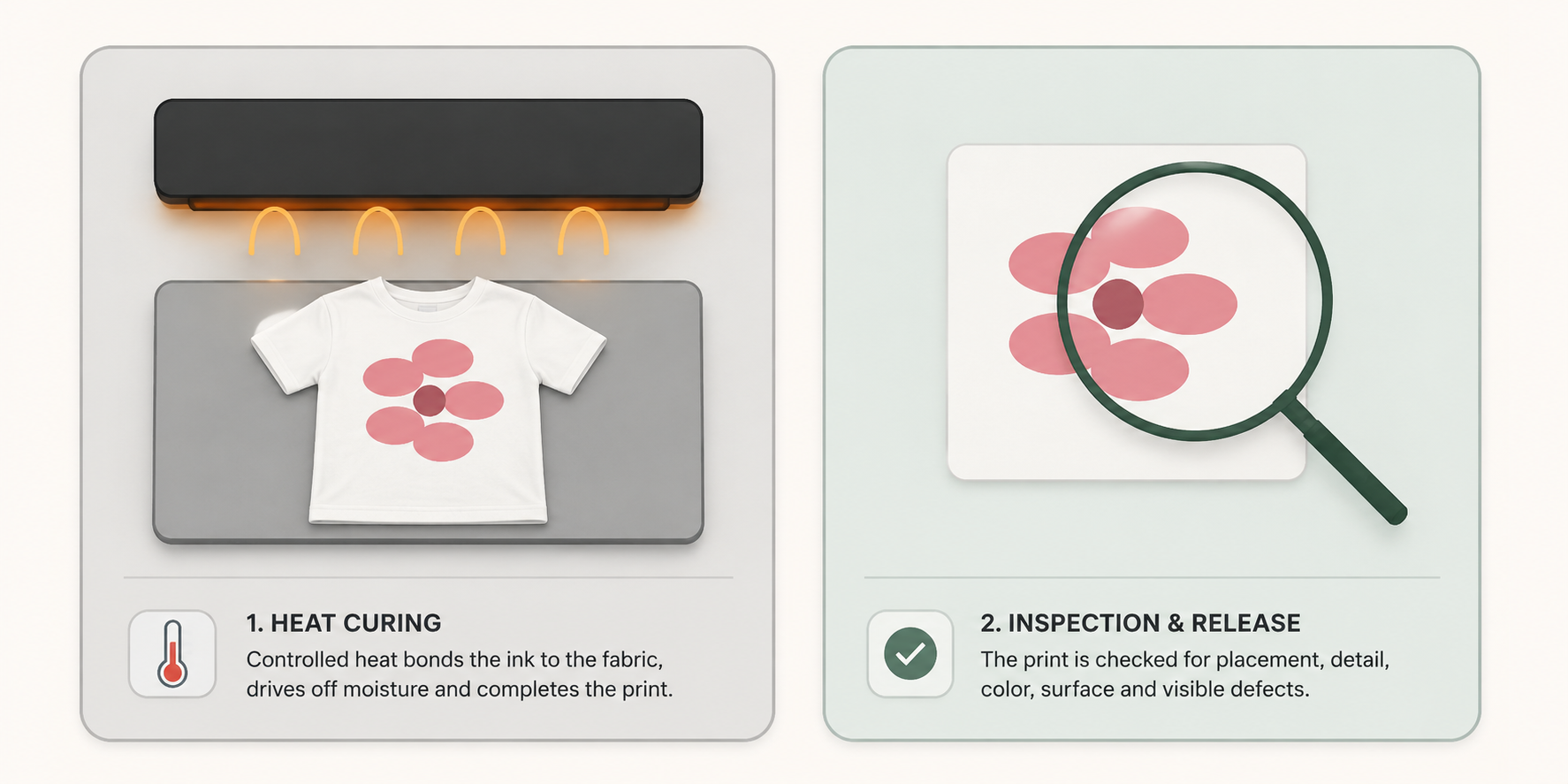
Heat curing fixes the pigment system; inspection checks placement, detail, color, surface and visible defects.
The print is not finished when it leaves the printer. It must be cured with controlled heat so the carrier fluid is removed and the ink system bonds properly with the textile. Brother describes curing as essential for resistance to washing and normal wear. Its published GTX starting settings include 356°F (180°C) for 35 seconds with a heat press, or approximately 320°F (160°C) for about 3 minutes 30 seconds in a conveyor, while emphasizing that equipment and garments may require testing. (2)(6)(7)
Final production checks
- Cure verification: temperature, dwell time and pressure or airflow must beappropriate for the specific garment and ink system.
- Visual inspection: the print is checked for banding, missing nozzles, misplaced whiteunderbase, lint marks, wrinkles and inaccurate placement.
- Hand-feel review: excessive stiffness, gloss,residue or scorching can indicate an unsuitable recipe or curing problem.
- Wash testing: new garment types, colors or cure settings should be tested rather than assumed to perform identically.
Both under-curing and over-curing can cause problems. Under-curing may lead to early cracking or ink loss; excessive heat can scorch fabric, change dye color or make the print surface less pleasant. A professional workflow therefore treats curing as a measured technical stage, not simply “adding heat.”
The quality-control principle
The final garment is the result of a complete system: artwork, blank, pretreatment, ink deposit and curing. A weakness in any one stage can affect appearance, touch or wash durability.
9. What we want you to know before you buy
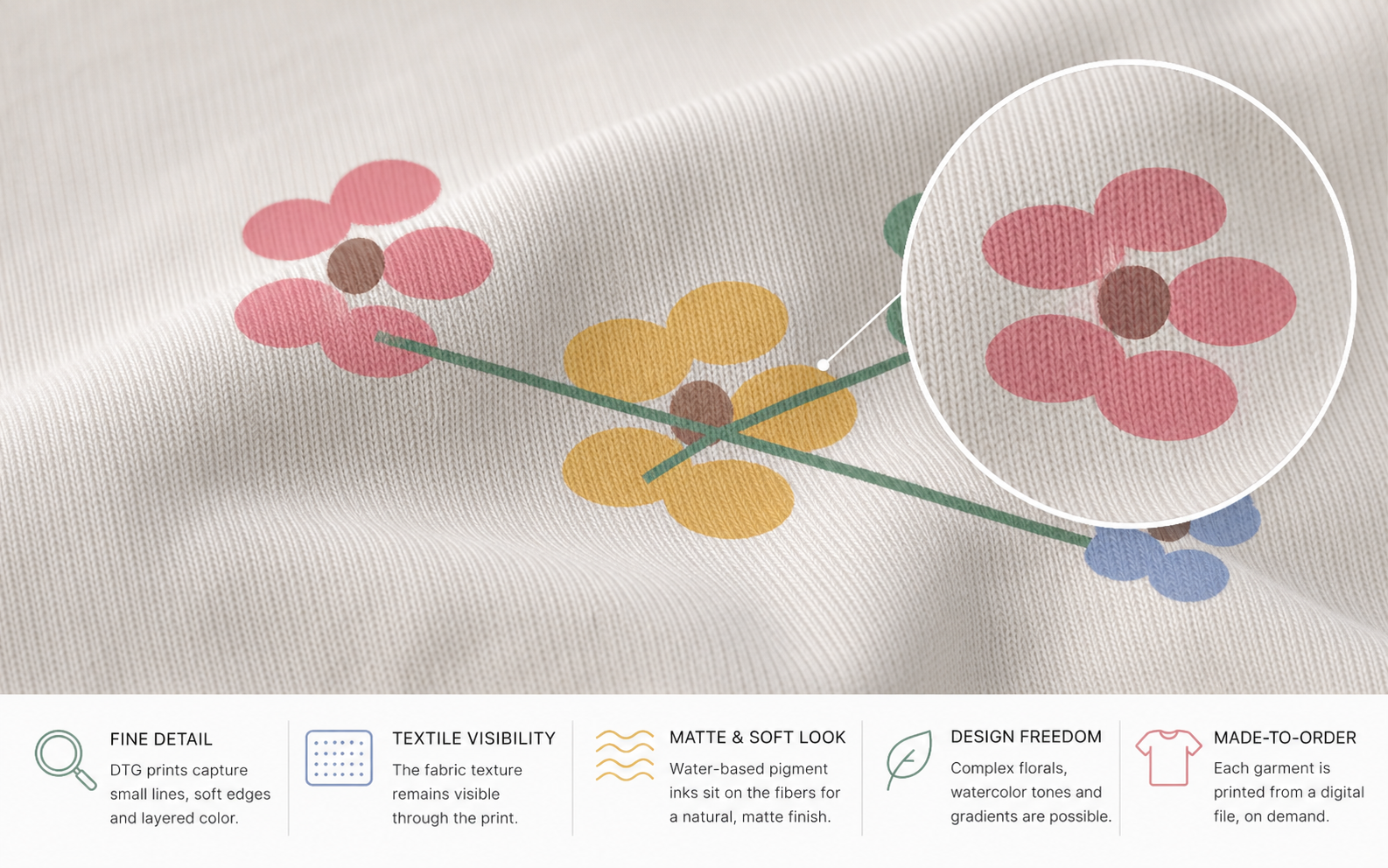
DTG pigment printing allows fine artwork to remain visibly connected to the texture of the textile.
From Bazaar Of Designora to you: we choose DTG pigment printing when it supports the artwork, the product and the production quantity. It gives us the freedom to reproduce complex flowers, layered color and soft transitions without simplifying every design into a small number of screen-print colors. It also supports on-demand production because each garment can be printed from a digital file without preparing a new physical screen for every color.
A concise customer summary
- Appearance: detailed, matte and textile-like, with the garment texture remaining visible.
- Touch: often soft on light garments and open designs; more noticeable on dark garments or dense artwork that requires a white underbase.
- Washing: durable when properly cured, but best preserved by cold inside-out washing, mild detergent and low heat.
- Weather: the garment fabric controls comfort. Large dense prints can reduce airflow locally, while smaller open prints remain less noticeable.
- Aging: gentle softening and gradual fading are normal textile behavior; sudden flaking or cracking is not the intended result.
Technical references
(1) Brother, “Pretreating 101” and GTX pretreatment guidance.
(2) Brother, “Steps of DTG” and curing equipment guidance.
(3) Kornit Digital, “Pretreatment Definition.”
(4) Brother, “What is the Wash Durability of a GTX Print?”
(5) Epson, “DTG & DTF Printers for Small Businesses” and garment-care FAQ.
(6) Brother, “Curing GTX Ink and Pretreat: Special Cure Times.”
(7) Brother, “How Long Does it Take to Cure Innobella Textile Inks?”