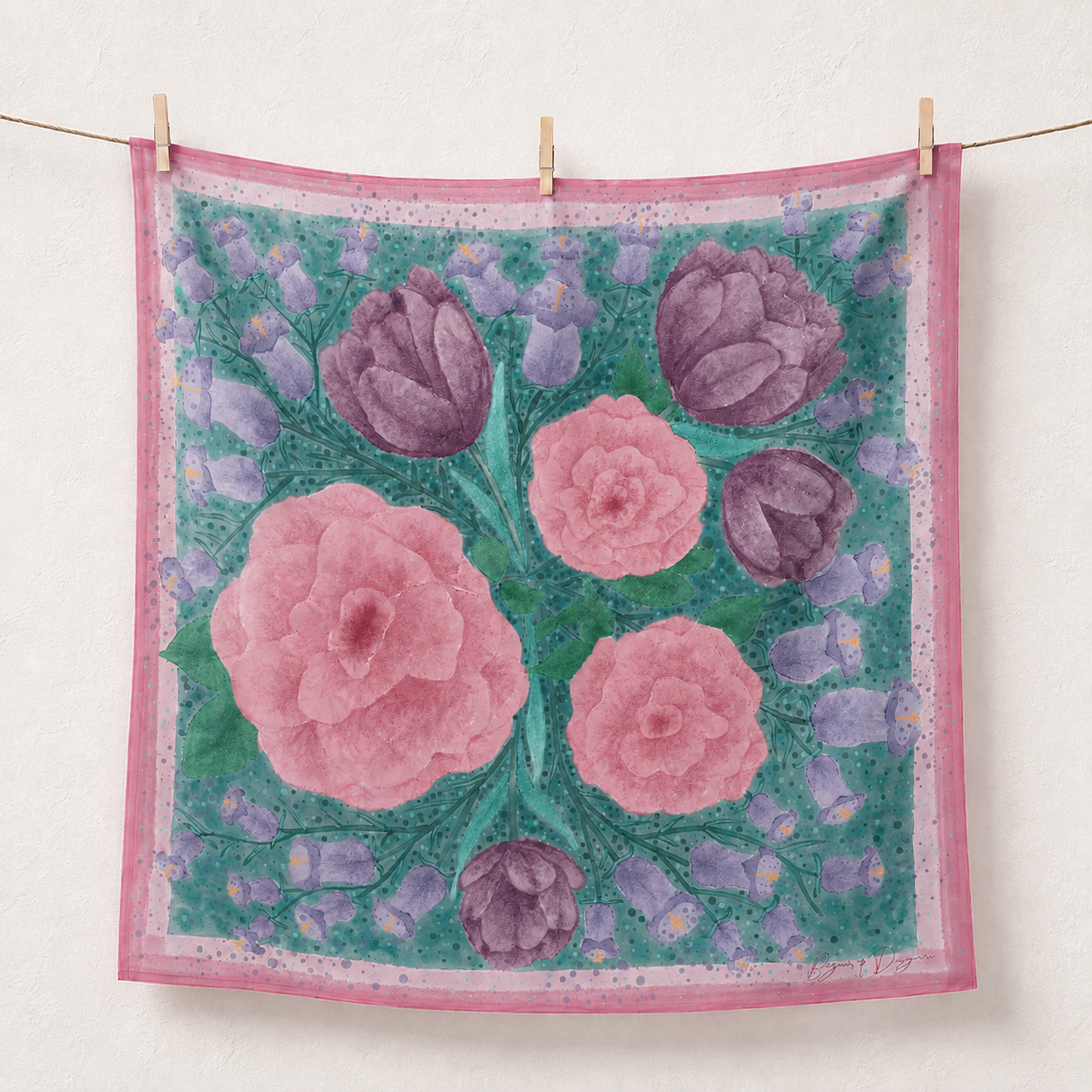
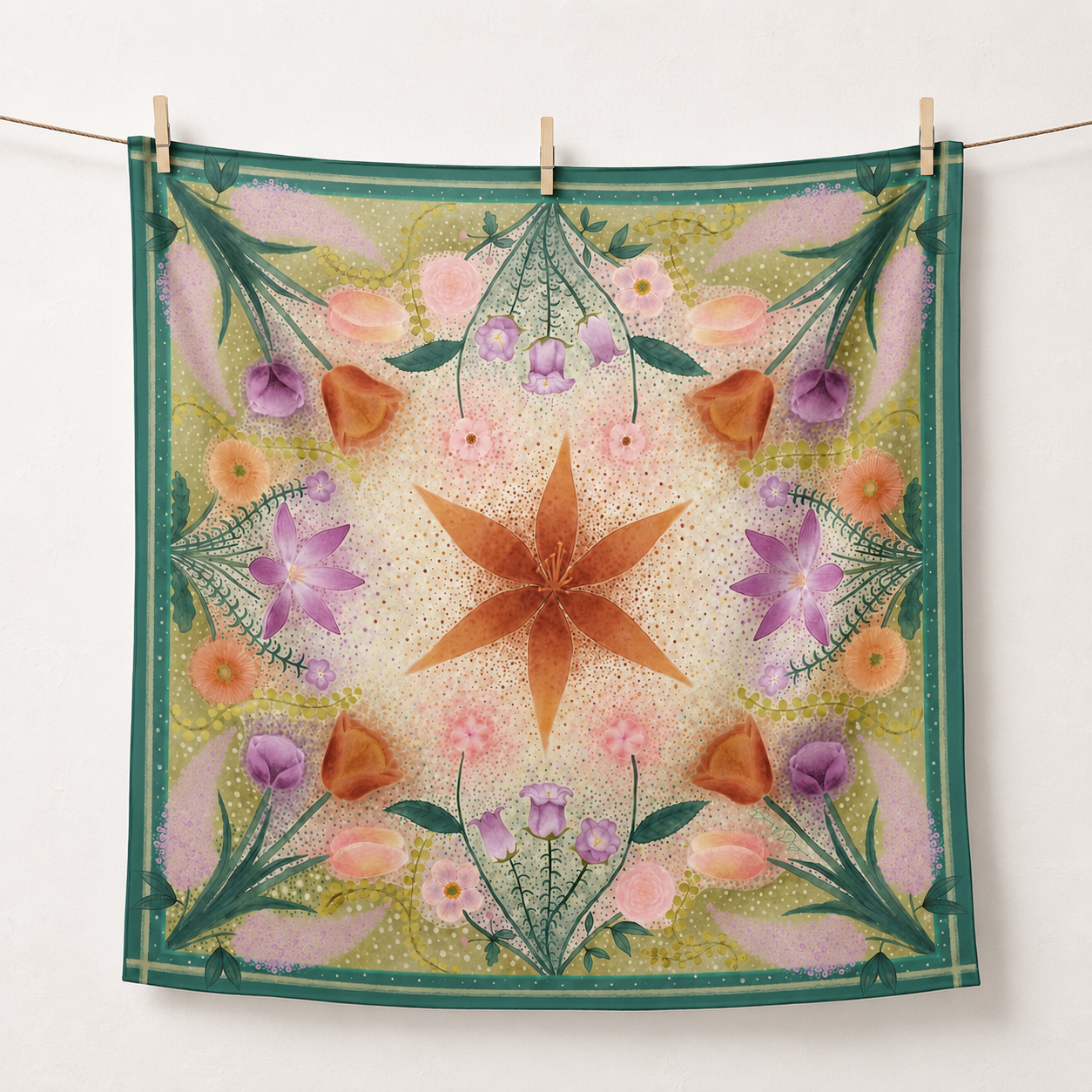
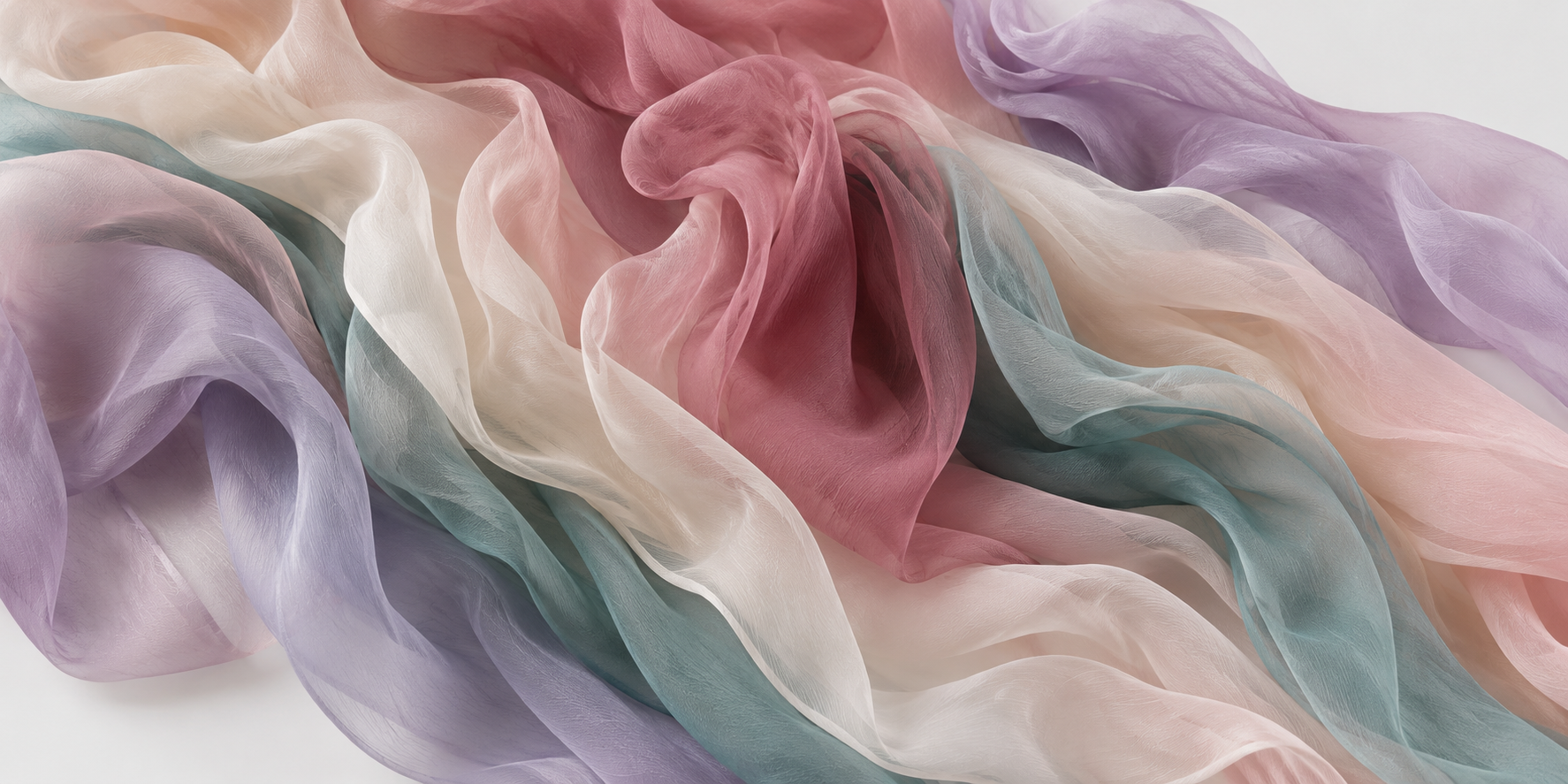
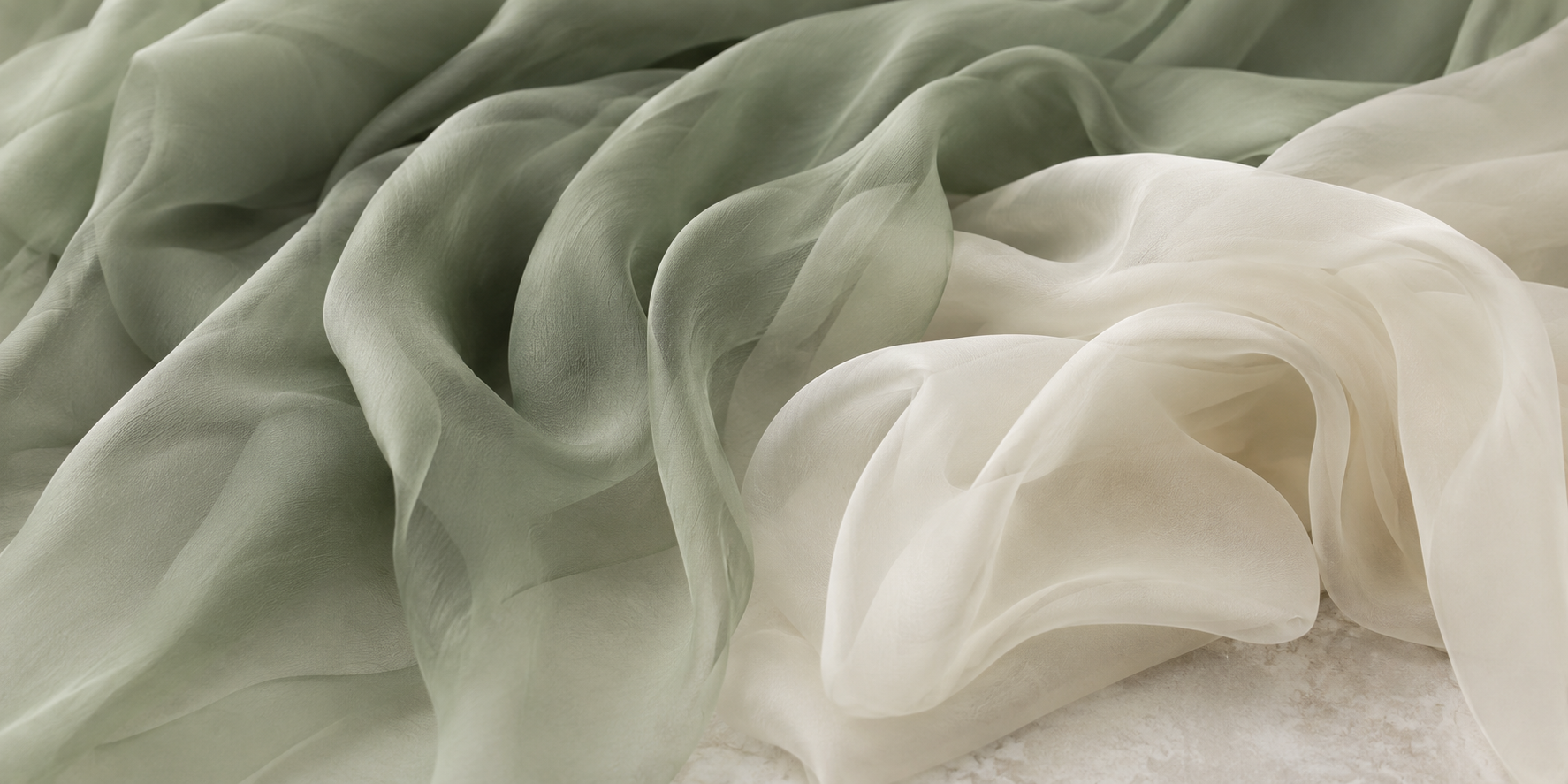
At Bazaar Of Designora, we want you to understand the material beneath the artwork. When you choose one of our designs on 100% polyester chiffon, you are choosing an exceptionally light woven fabric with a semi-transparent appearance, a softly grainy surface and a flowing drape. It can create generous volume without feeling heavy, which is why chiffon works so naturally for square scarves, wraps and decorative layering.
What “100%” means
The textile fibers in the scarf fabric are polyester. The term does not mean the finished scarf contains literally nothing else: dyes, printing inks, sewing thread or finishing agents may also be present.
Our transparency note
The sentence about Gildan and cotton in the brief belongs to the previous T-shirt guide. Gildan does not define this chiffon scarf. Here we explain the typical production route for polyester chiffon without inventing a supplier-specific claim.
1. What are you actually wearing?
Polyester chiffon is a fabric construction, not simply a fiber name. “Polyester” tells you what the filaments are made from; “chiffon” describes the extremely light, sheer woven textile created from fine yarns—often with high twist—and a simple interlacing structure. The result is a fabric that looks delicate but is generally more durable and dimensionally stable than its appearance suggests.
How it looks when you style it
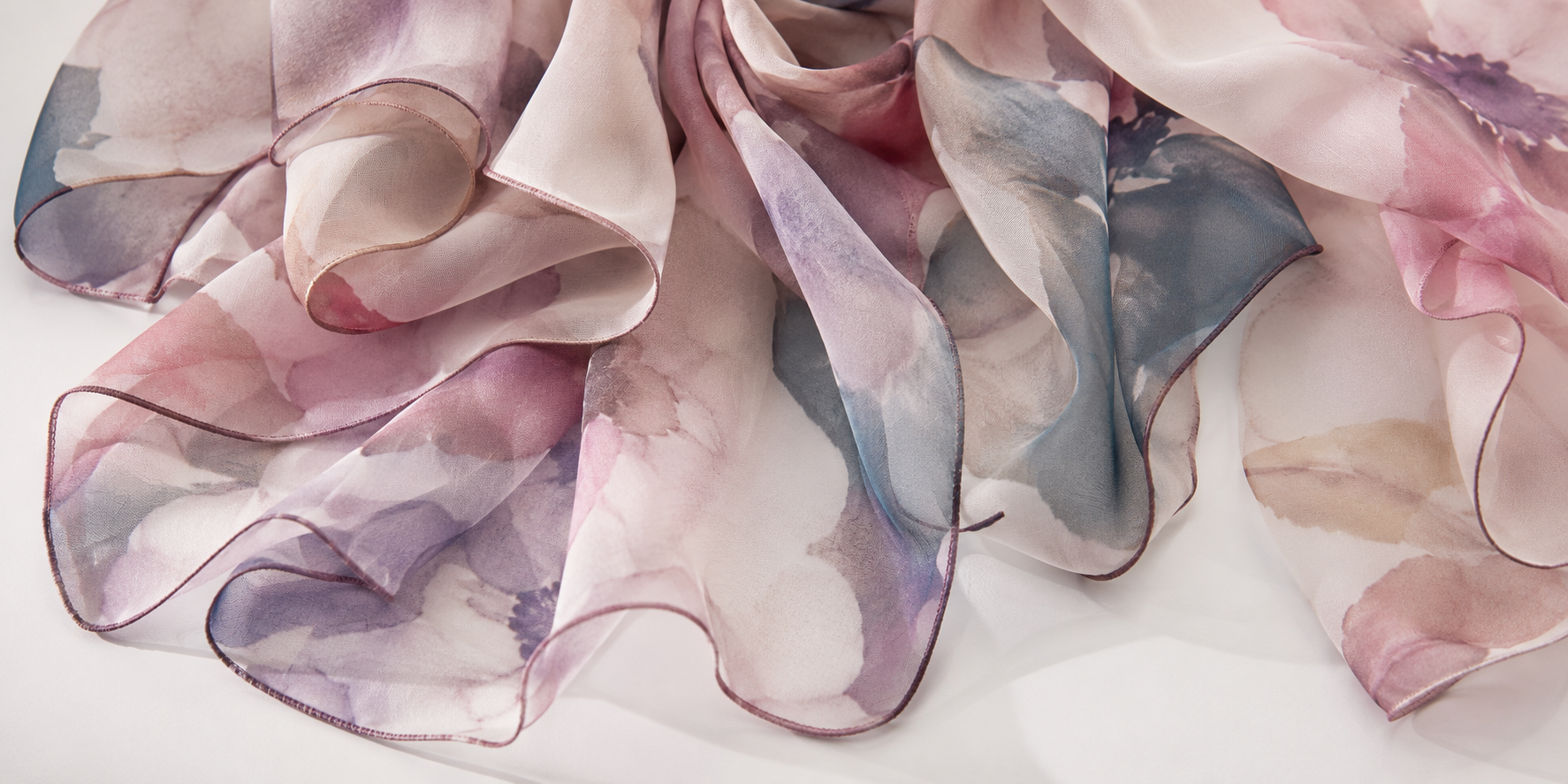
- The surface is usually matte or softly luminous rather than glossy. Light is diffused through the fine textured weave.
- Because the fabric is translucent, a single layer looks airy; overlapping layers deepen the color and create new tones.
- The drape is fluid, butchiffon is not limp. Its fine crepe texture gives it a gentle crispness that helps folds stay visible.
- A large scarf can look abundant without adding the visual or physical weight of a thick woven accessory.
- Printed artwork may appear softer where the fabric is held against light and richer where the scarf folds over itself.
What this means for your print
Chiffon does not behave like opaque paper. Light, background color and overlapping layers all affect how a printed design appears. We consider that translucency part of the design experience, not a defect.
2. How does polyester chiffon feel against your skin?
Polyester chiffon feels very light. You are more likely to notice its movement and edges than its weight. Against the skin, the face of the fabric usually feels dry, fine and slightly grainy rather than plush, fuzzy or slippery. That subtle grain comes from the yarn twist and woven construction that give chiffon its characteristic crepe hand.
| Question | Our honest answer |
| Is it soft? | Yes, but in an airy, dry way rather than a plush or cushioned way. |
| Is it smooth? | It glides easily, yet the surface retains a fine granular texture. |
| Does it feel cool? | It can feel cool at first because it is thin and holds little insulating air. |
| Can it irritate? | Sensitive skin may notice the hem, static or prolonged rubbing more than the body fabric. |
Small details you may notice
- The fabric can generate static in dry conditions, particularly around syntheticknitwear or hair.
- Fine chiffon may snag on rough nails,jewelry or hook-and-loop fasteners.
- A narrow rolled, baby or overlocked hem adds slightly more body around the perimeter.
3. What happens when you sweat?
Polyester is hydrophobic: it has little natural affinity for water and a very low moisture regain compared with absorbent fibers such as cotton. This means the filaments themselves do not take up much perspiration. Moisture may remain on the fabric surface, spread through capillary spaces between yarns or transfer to another layer before it evaporates.
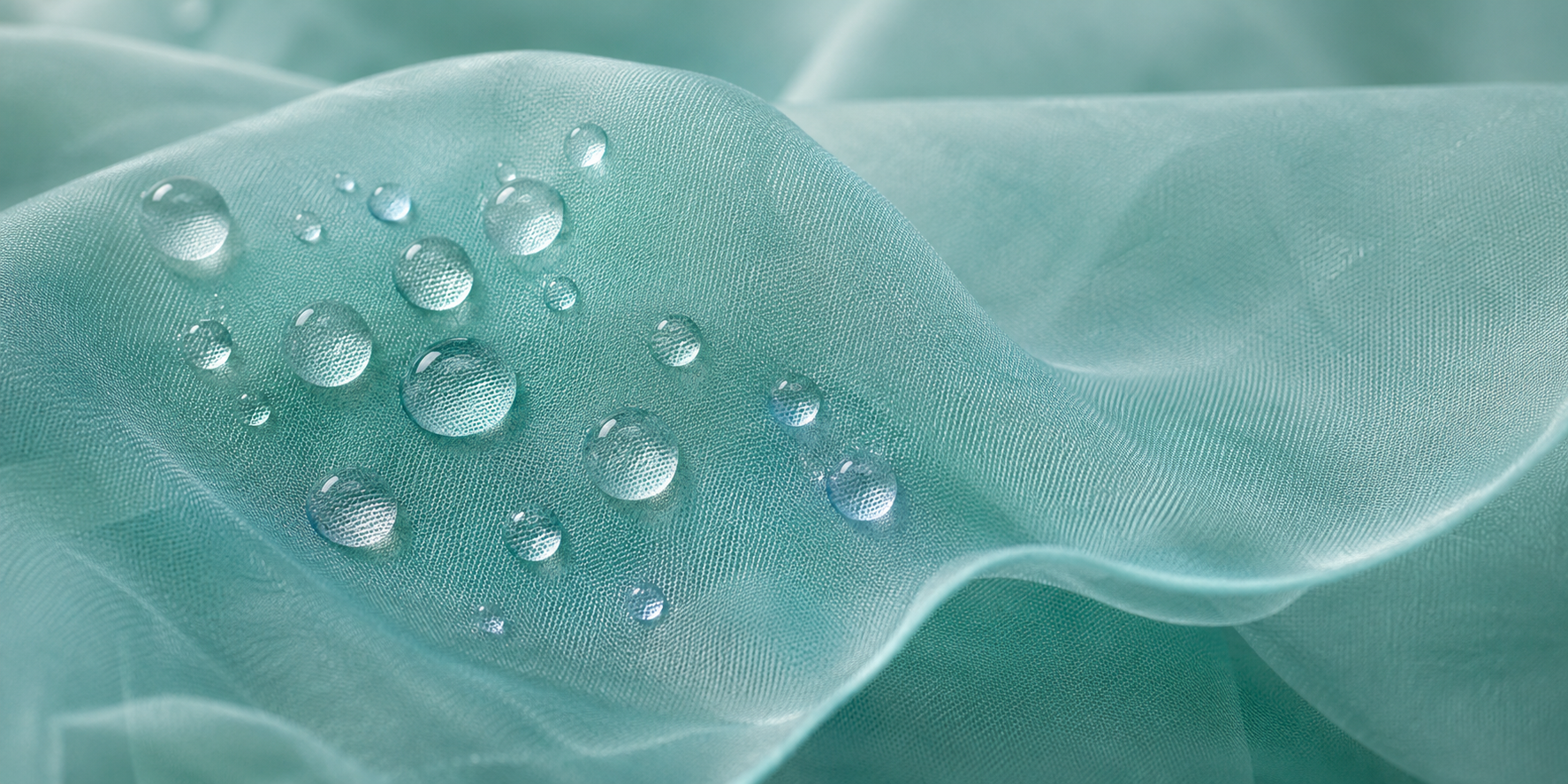
| Question | Our honest answer |
| Light perspiration | Small amounts of moisture can evaporate relatively quickly because chiffon is thin and light. |
| Heavy perspiration | It is not automatically moisture-wicking; dampness can remain noticeable where the scarf touches skin. |
| Humid weather | High humidity slows evaporation, so areas around the neck may feel slightly clammy. |
| Drying time | After washing, the scarf generally dries quickly because the fibers absorb little water. |
Our honest performance description
We would describe polyester chiffon as quick-drying and low-absorbency—not as a technical moisture-wicking performance fabric unless the specific textile has been engineered and tested for that purpose.
Odor and oils
Polyester can hold body oils and cosmetic residues. Perfume, hair products and makeup may leave marks or odors, so gentle cleaning before storage helps keep the scarf fresh.
4. How does it feel in hot, mild and cold weather?
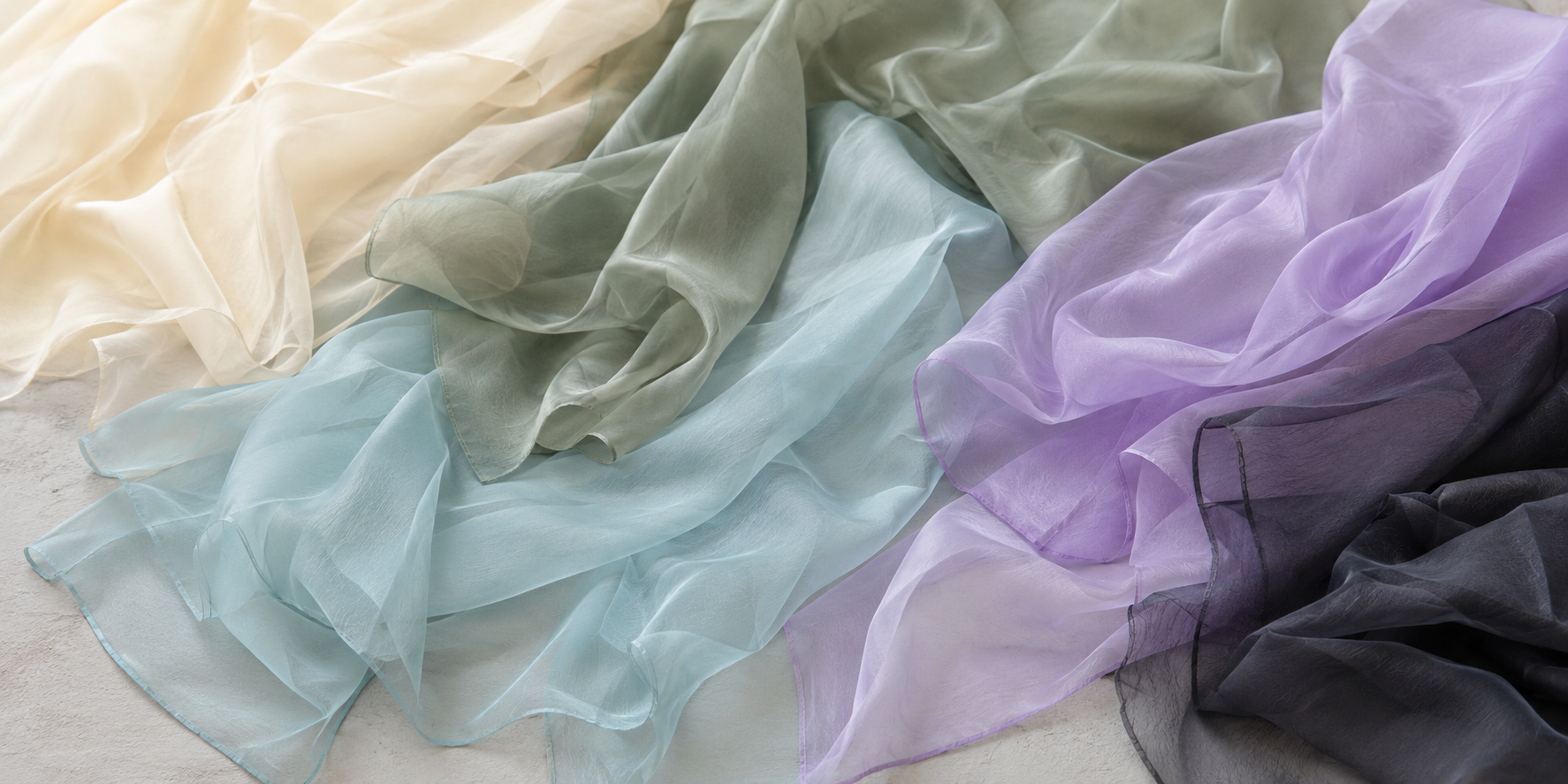
Hot weather
Chiffon is at its most convincing in warm weather. Its low weight, loose drape and fine structure allow air to move around the scarf more easily than a compact, heavy fabric would. It adds coverage without much insulation. However, polyester does not absorb sweat like cotton, so a tightly wrapped scarf can still feel humid around the neck. Looser styling is usually more comfortable in heat.
Mild weather
This is the most versatile season for poly chiffon. It adds color, movement and a light barrier against a breeze without making an outfit feel bulky. Multiple layers can create a little more coverage while preserving the fabric’s transparent character.
Cold weather
Poly chiffon is decorative rather than insulating. A single layer provides almost no meaningful warmth. In cold conditions, it works best over a coat, under a collar or layered with wool, cashmere or a padded outer garment. Its value is visual softness and wind flutter—not thermal protection.
| Best climate use
Warm to mild weather, indoor events, travel, formal layering and styling that benefits from movement. |
Less suitable on its own
Freezing temperatures, prolonged wind exposure or situations where you need moisture absorption and insulation. |
5. Production journey, part one: from chemical feedstocks to PET chips
The following four pages explain a typical polyester-chiffon route. Exact machinery, chemistry, recycled content, printing method and finishing sequence vary by mill. We are describing the industry process honestly—not claiming that every scarf supplier uses one identical factory line.
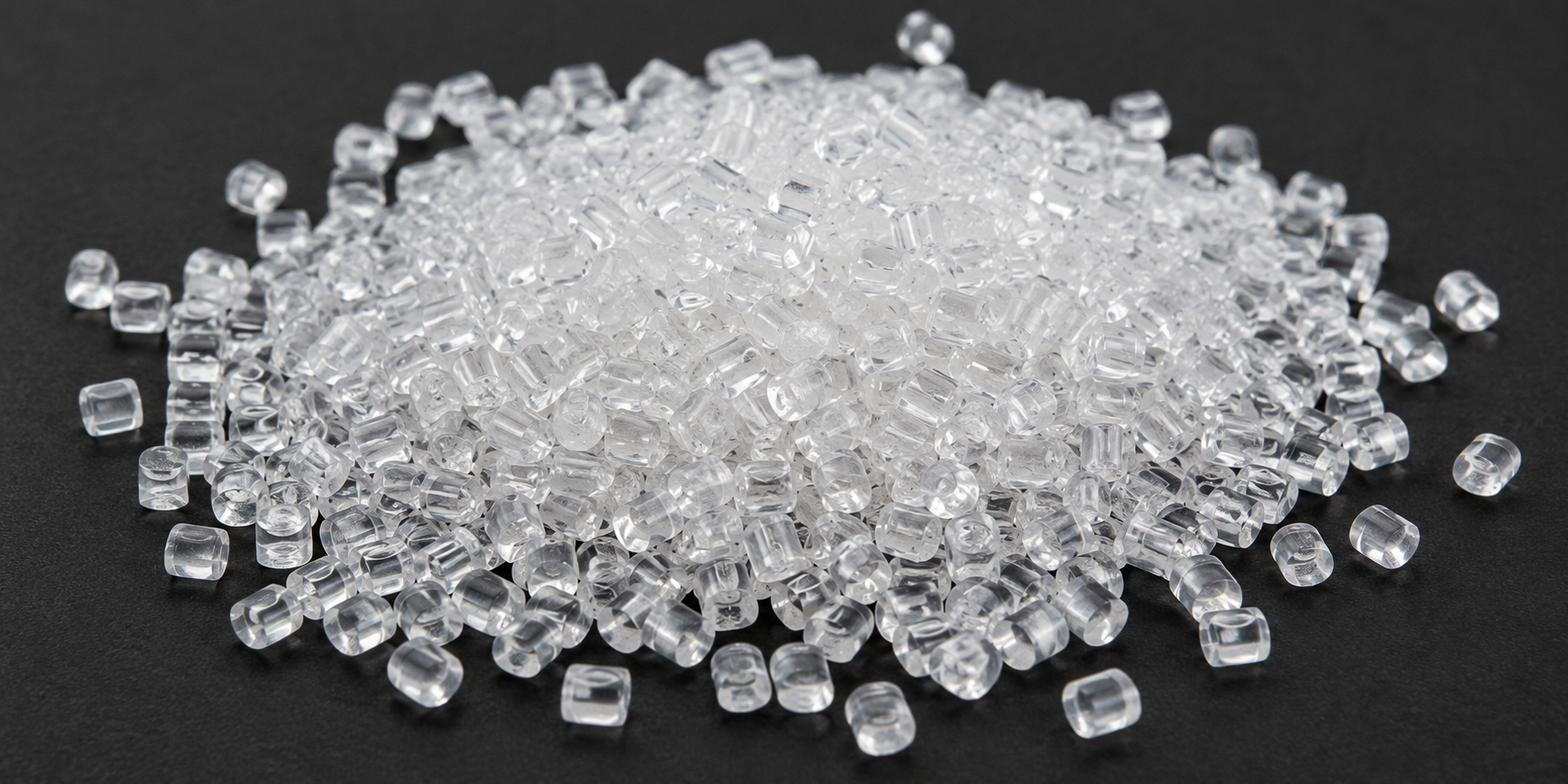
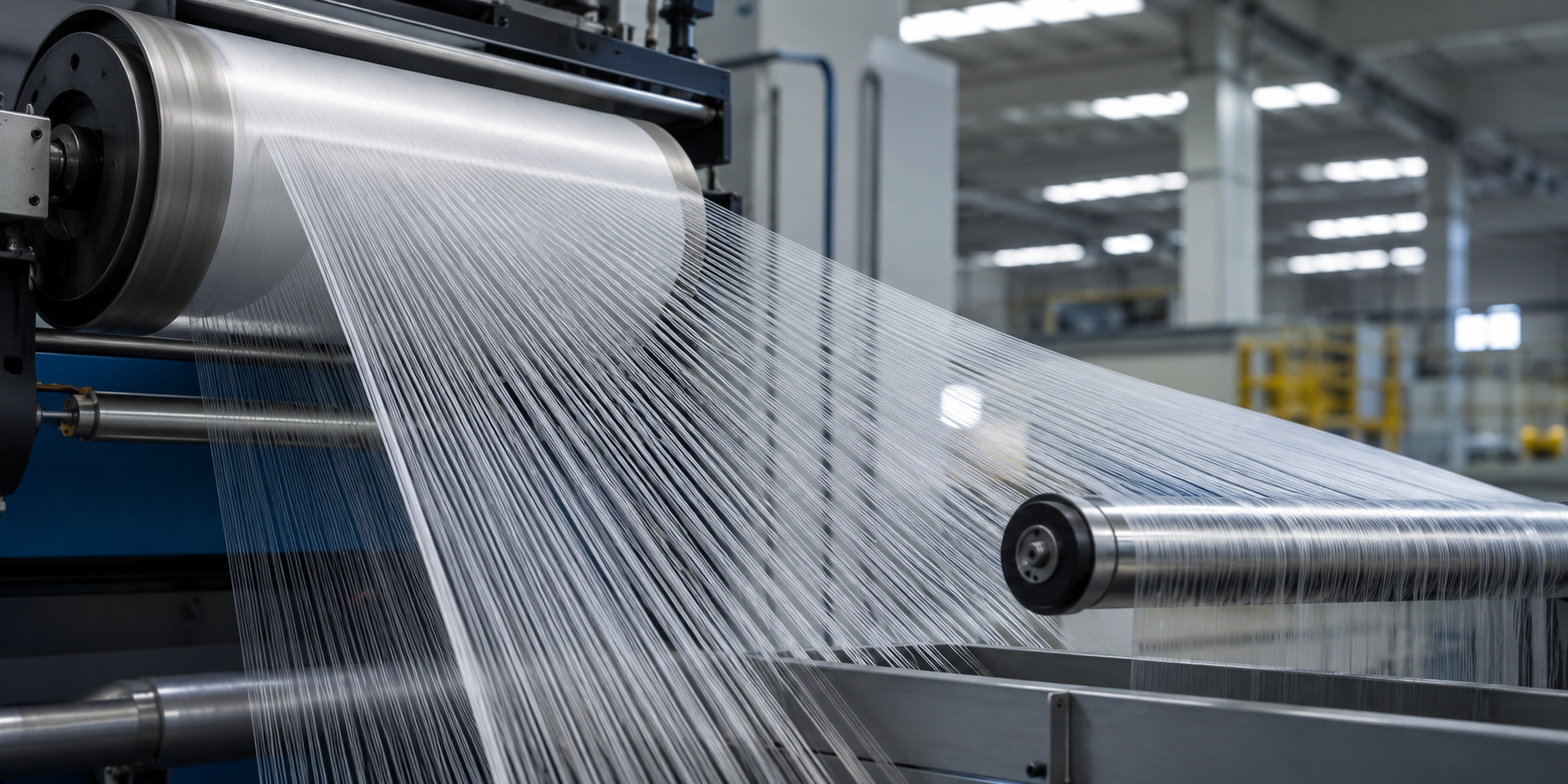
Step 1 — creating the polyester polymer
Most textile polyester is polyethylene terephthalate, or PET. Its conventional raw-material chain uses purified terephthalic acid and monoethylene glycol. Through polymerization, these small molecules are linked into long polyester chains. Depending on the product, the feedstock may be virgin, recycled or a controlled mixture, but the finished fiber must meet the required viscosity, purity and processing specifications.
Step 2 — forming, drying and preparing the chips
The polymer is commonly solidified and cut into small chips or pellets. Before fiber spinning, PET chips are carefully dried because excess moisture at high temperature can damage the polymer chains. Consistent chips help the melt flow evenly and reduce defects in the ultrafine filaments needed for a sheer textile.
Why this matters to you
The clean, consistent appearance of chiffon begins long before weaving. Polymer purity and stable melt behavior help create filaments that are fine, even and strong enough to survive twisting, weaving, printing and everyday wear.
6. Production journey, part two: melt spinning, drawing and yarn preparation
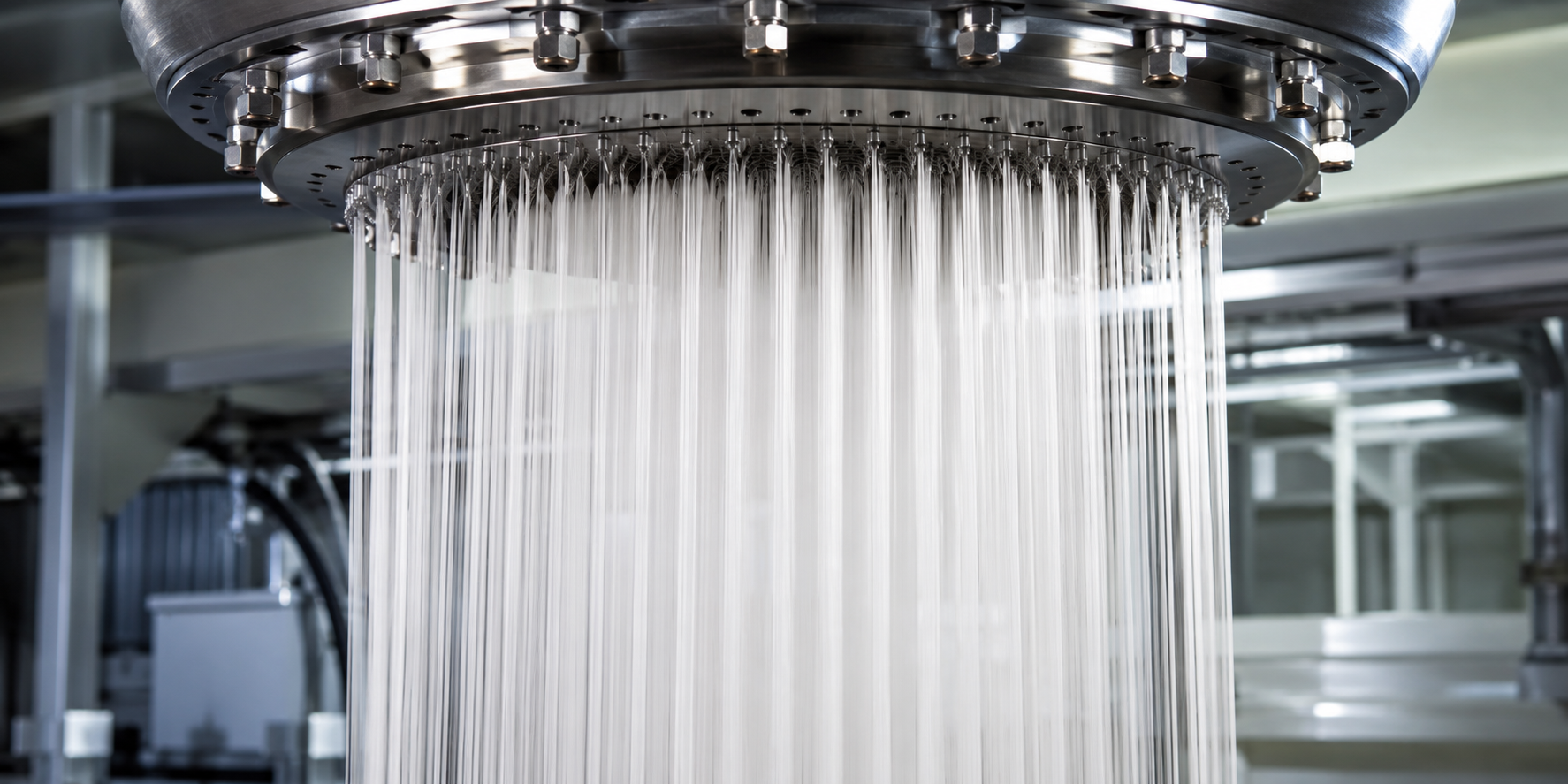
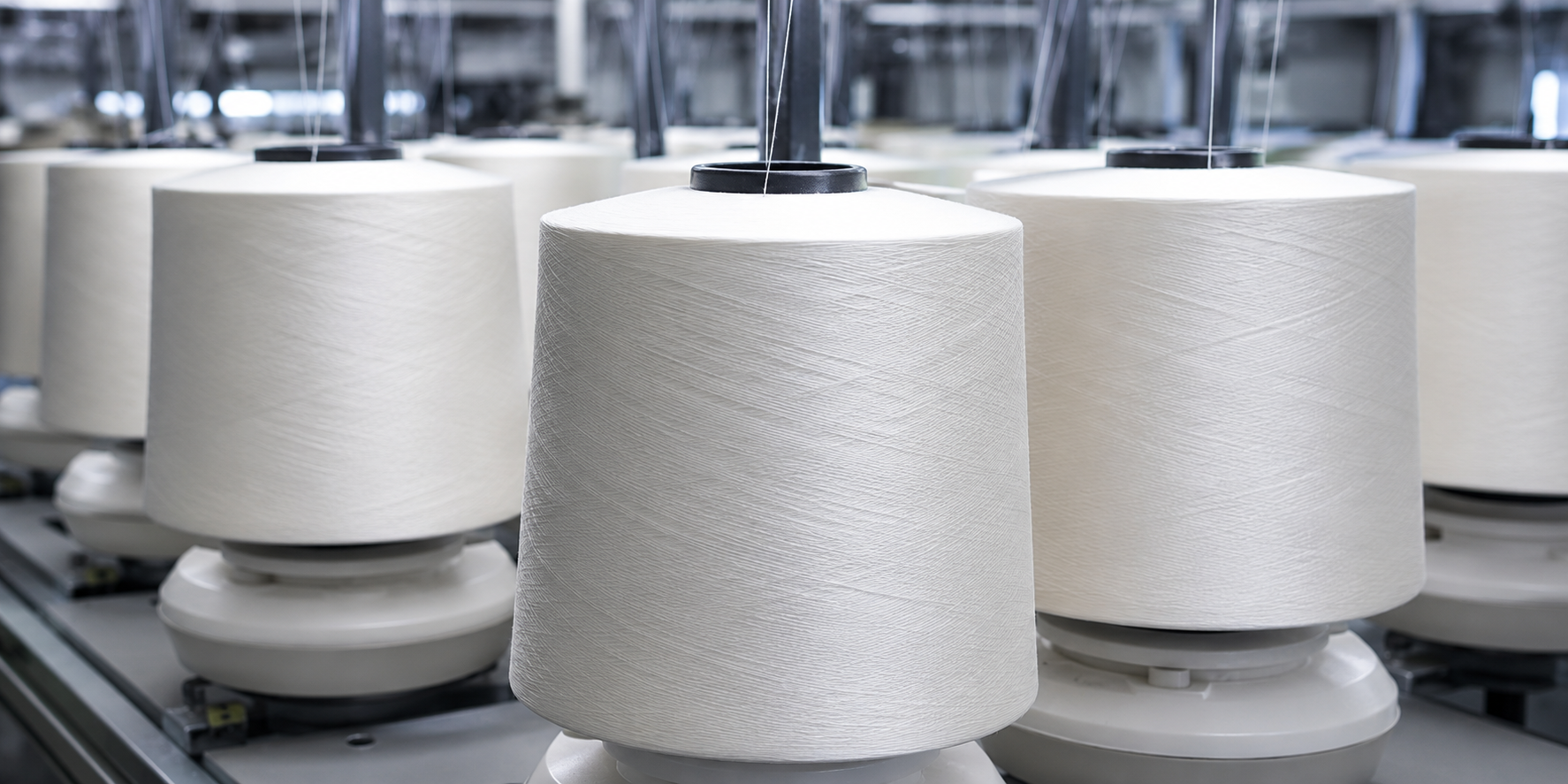
Step 3 — melt spinning and quenching
The dry PET chips are melted and filtered. Pumps meter the molten polymer through spinnerets—precision plates containing tiny holes. Each opening creates a continuous filament. Cool air then solidifies the emerging threads. The size and shape of the spinneret openings can influence filament fineness, luster and handle.
Step 4 — drawing and molecular orientation
Newly spun filaments are stretched, or drawn, so the polymer molecules become more aligned. Drawing increases strength and dimensional stability. Heat may be used to stabilize the orientation. The producer can also control luster with additives and use texturizing processes when more bulk or a different hand is required.
Step 5 — winding and yarn preparation
The filaments are gathered into yarn packages under controlled tension. Chiffon typically relies on very fine filament yarns. For its characteristic crepe surface, the yarns may receive substantial twist in opposing directions. Twist stores energy in the yarn and contributes to the subtle pebbled texture once the fabric is relaxed and finished.
Why chiffon feels different from smooth lining fabric
Two fabrics can both be 100% polyester yet feel completely different. Filament fineness, twist, yarn count, weaving density and finishing determine whether the result is crisp chiffon, smooth satin, dense georgette or another textile altogether.
7. Production journey, part three: twisting and weaving chiffon
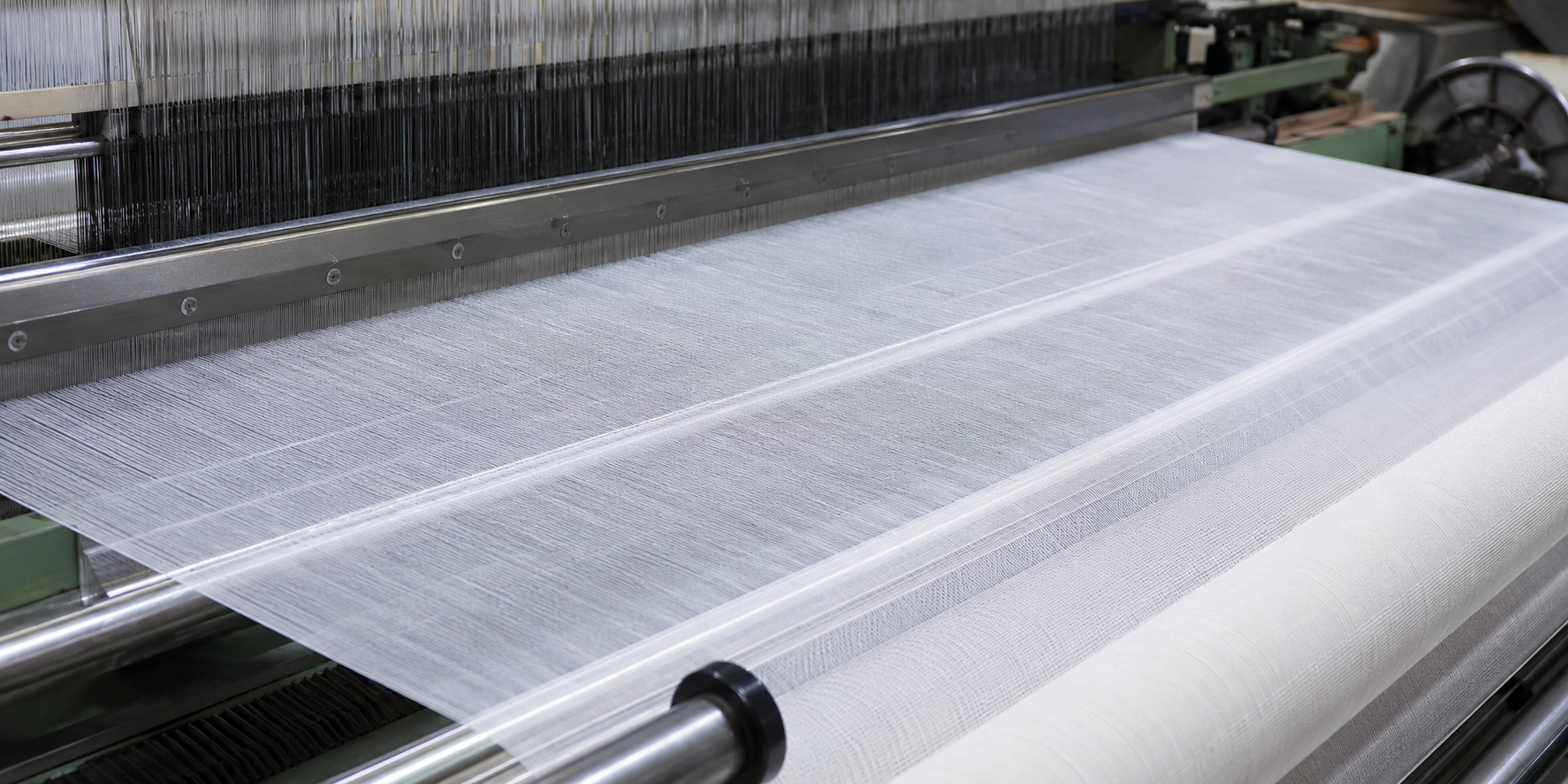
Step 6 — preparing warp and weft
Before weaving, hundreds or thousands of fine warp yarns must be arranged parallel to one another and wound onto a beam. Their tension has to remain consistent: an uneven or broken end can create a visible line in a fabric this sheer. Weft yarn is prepared separately so it can cross the warp during weaving.
Step 7 — building the plain weave
Chiffon is usually woven in a simple one-over, one-under plain weave. The simplicity of the interlacing does not make the fabric easy to manufacture. Fine yarns, high twist and low fabric weight demand precise tension control. The yarns are spaced openly enough to preserve translucency but closely enough to create a coherent, durable cloth.
Step 8 — relaxation and crepe development
After weaving, the grey fabric may look flatter or more tense than the finished scarf. Wet and heat processing allow the highly twisted yarns to relax. Their stored torque produces the fine puckered or pebbled surface associated with chiffon. The fabric is then washed or scoured to remove processing oils and preparation chemicals.
| What creates the sheerness
Very fine filament yarns, low fabric mass and controlled spacing between yarns allow light to pass through. |
What creates the grain
Yarn twist, alternating twist direction and relaxation during wet processing help form the dry crepe hand. |
8. Production journey, part four: color, printing, finishing and hemming
Step 9 — dyeing or printing
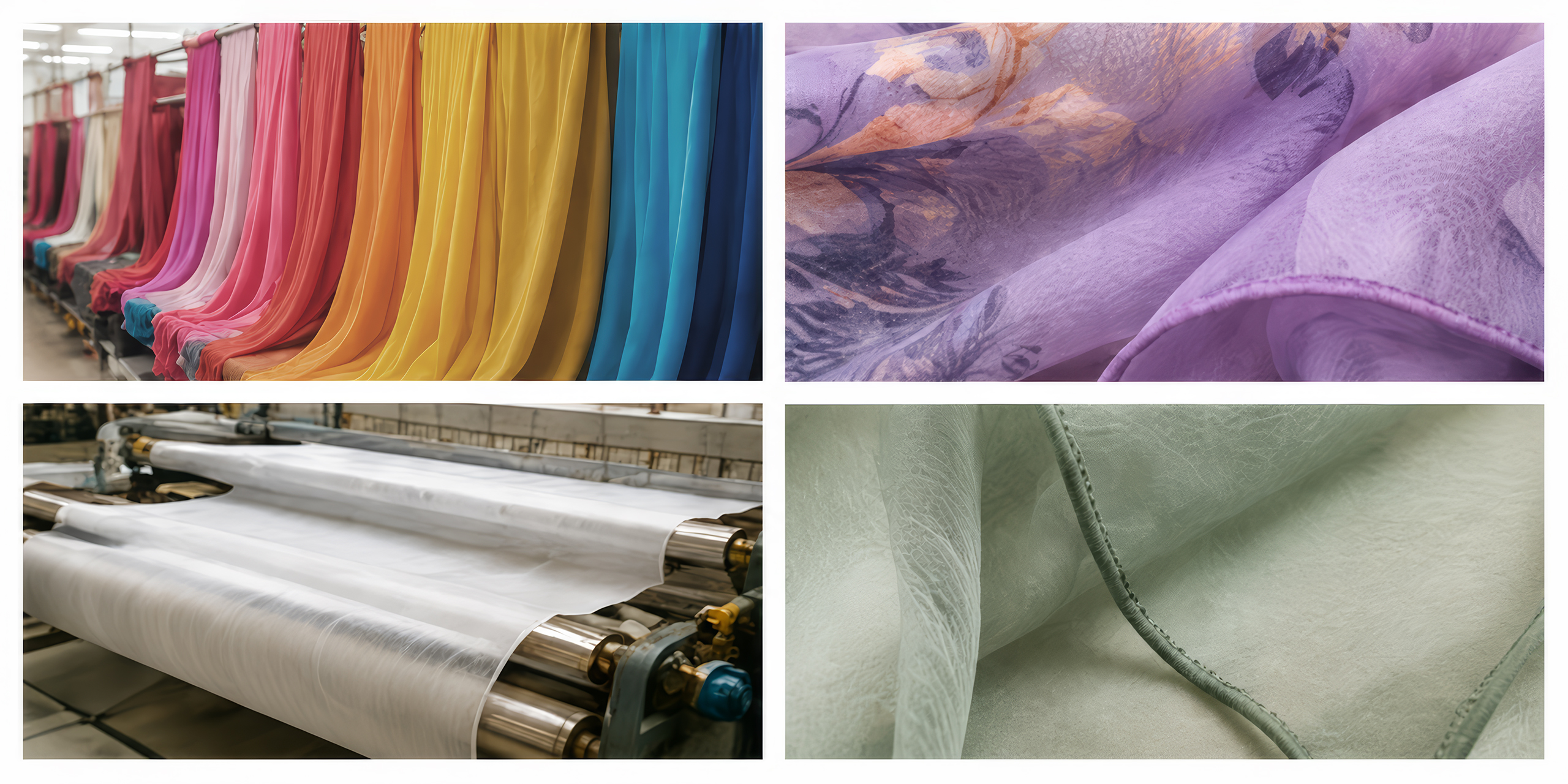
Polyester is commonly colored with disperse dyes under controlled heat. A printed scarf may instead use transfer sublimation, direct disperse-ink printing or another polyester-compatible method. Heat helps the colorant move into the fiber structure. The exact process affects saturation, penetration, hand feel and how similar the front and reverse appear.
Step 10 — heat setting and finishing
The fabric may be heat-set to stabilize width and reduce unwanted shrinkage or distortion. Softeners, antistatic treatments or other finishes may be applied according to the desired hand and performance. Finishing must preserve chiffon’s lightness; too much coating would make it feel stiff or plastic-like.
Step 11 — inspection, cutting and hemming
The fabric is checked for lines, holes, stains, print defects, shade variation and skew. Scarf panels are then cut to size. Because chiffon frays easily at a raw edge, the perimeter is secured with a narrow rolled, baby or overlocked hem. Final pressing, measurement and inspection prepare the scarf for packing.
9. Living with your chiffon scarf: care, longevity and our final advice
What this fabric is best at
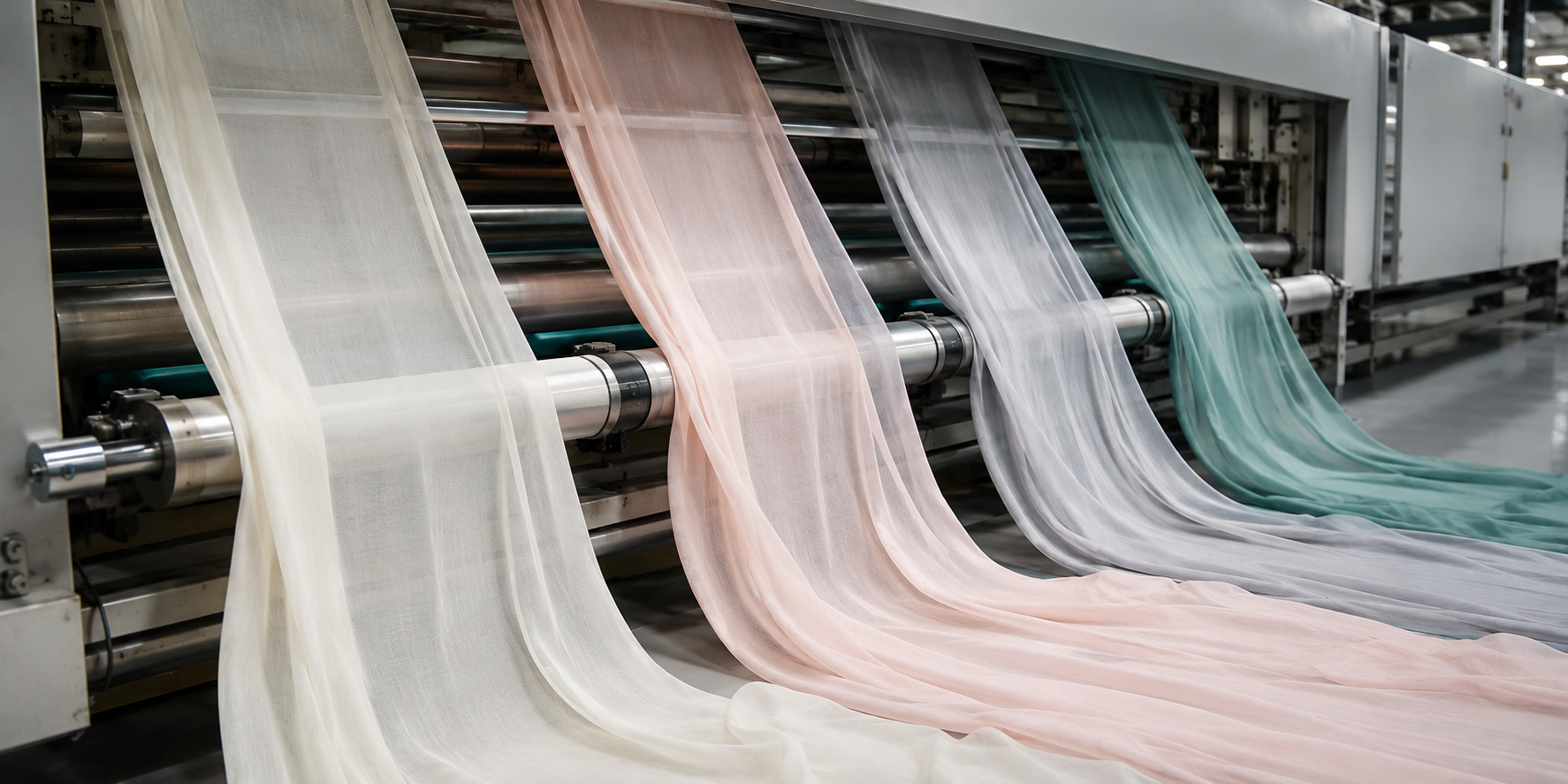
- Adding color and movement without making an outfit feel heavy.
- Creating layered transparency where folds overlap.
- Packing compactly and drying quickly after gentle washing.
- Working as a warm-weather scarf, indooraccessory or light travel layer.
Care guidance
- Follow the product carelabel; where hand washing is allowed, use cool water, mild detergent and minimal agitation.
- Do not wring or twist. Press out water gently and dry away from rough surfaces.
- Avoid high heat: a hot iron can glaze,distort or melt delicate polyester filaments.
- Store loosely folded or rolled, away from jewelry and hook-and-loop closures.
Our final description to you
100% polyester chiffon is light, sheer and expressive. It feels dry and finely textured rather than plush, and it handles moisture through low weight and quick drying—not high absorption.
Technical references consulted